Our journey through the Caucasian countries started in Azerbaijan. That post can be found here:
We said good bye to Aydin and proceeded to cross the border from Azerbaijan into Georgia. The first guard looked at my passport, then I went through the luggage scanner, walked for a good 10 minutes and stamped out of Azerbaijan. Then we walked through “no man’s land”. Josephine had all her camping equipment to carry so we each grabbed a side. That was a good 15 minute walk, a struggle enough with baggage but more so when you desperately have to pee! We were told there’d be a bathroom but nope. Nothing. A 2 hour drive after coffee and we were all desperate.
Finally we reached the Georgian side where we repeated the process. Our new guide was waiting but got a quick hello as we raced for the bathroom. As usual, there was long queue for women’s and nothing for men’s so I went for it. I got some strange looks from the men who came in as I was leaving but I didn’t care. RELIEF!
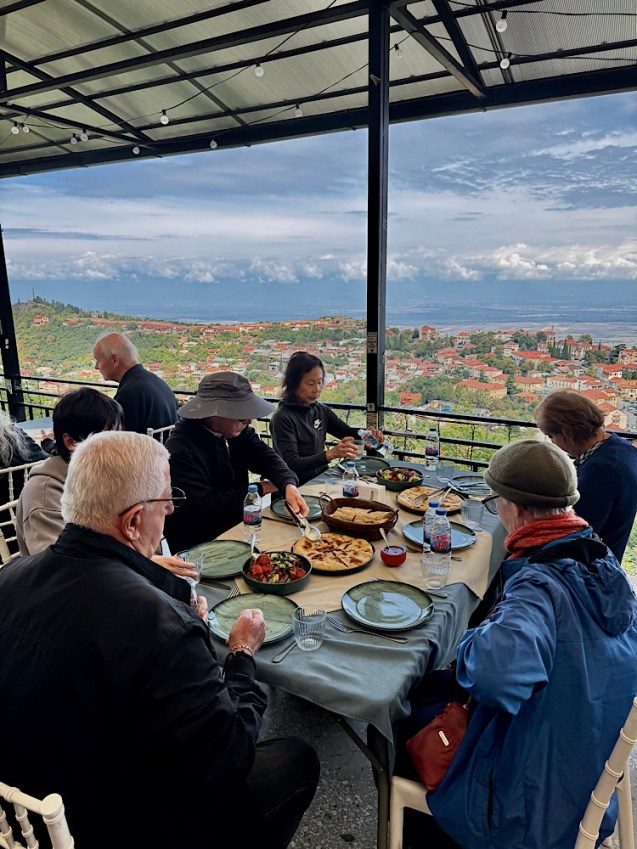
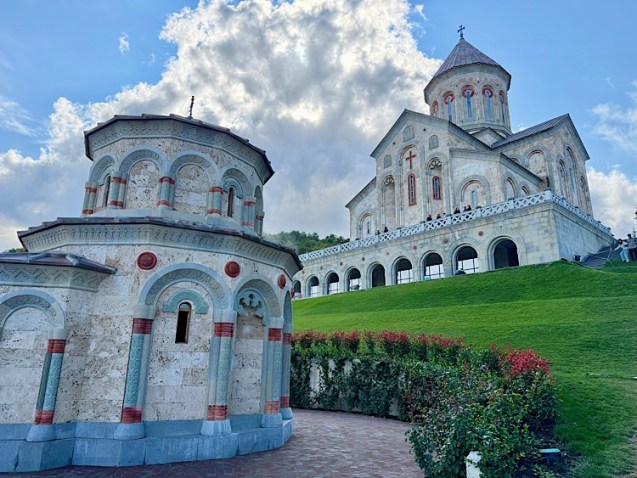
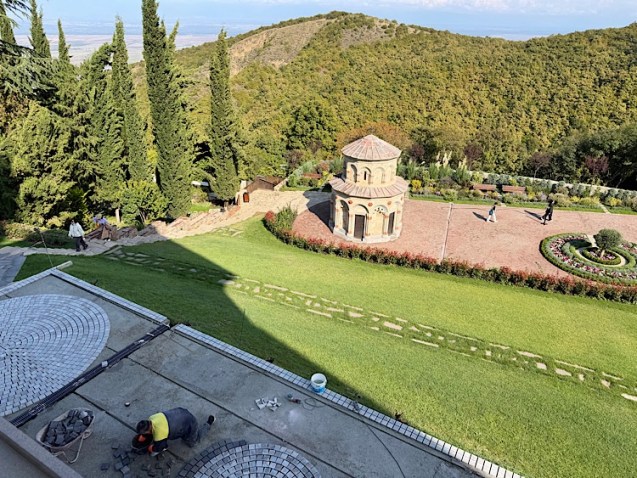
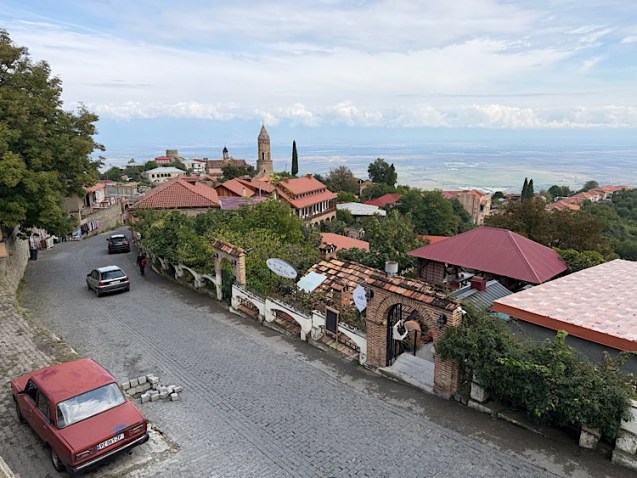
After greeting Luca properly, we loaded up the van and headed off. The biggest danger driving in the country side are cows. They wander everywhere. Sighnaghi is a pretty village in the Caucasian mountains and is called the “city of love”. Our lunch was delicious and included a spectacular view. The Bodbe monastery complex is beautiful. Originally built in the 9th century, it’s been renovated several times. It’s a major pilgrimage site as St. Nino, a woman who is said to have walked there from Cappadocia is buried there.
Approaching Tbilisi we got a taste of the terrible traffic Luca warned us about. A screw up at the hotel took some time but after finally settling in Davindar, Josephine and I went on a walk about. The city was teeming. People walking everywhere. Lucky for us they weren’t all wanting gelato.
The next few days we did day trips out of Tblisi. It is nice to stay in one place and the hotel Castor and Pollux (Or Custard and Bollocks according to Davindar lol) serves a really good breakfast. Always a bonus.
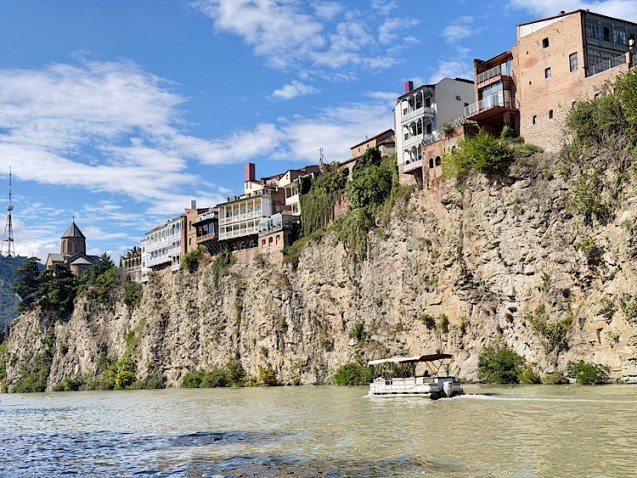
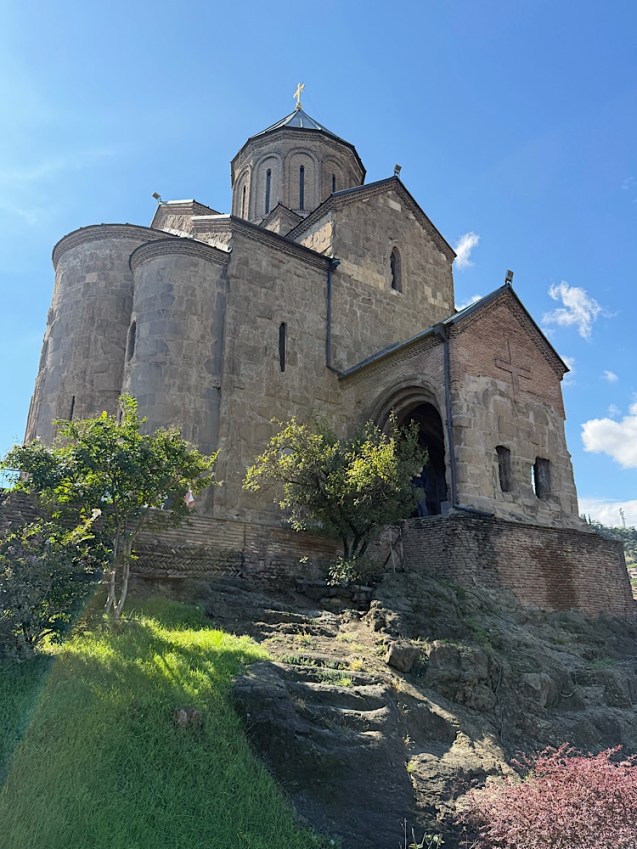
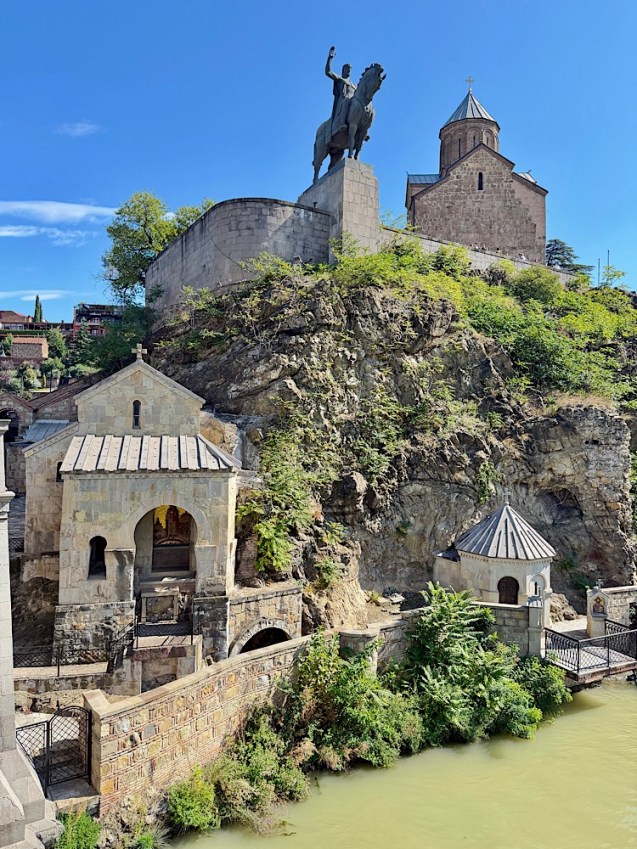
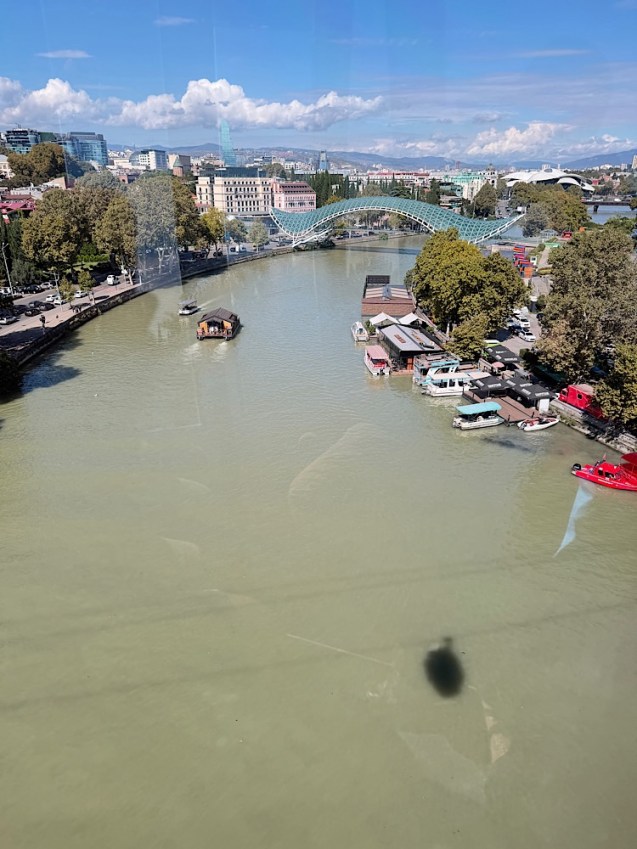
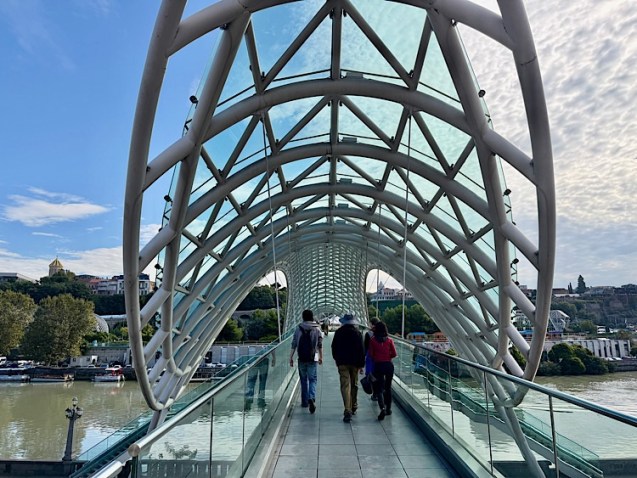
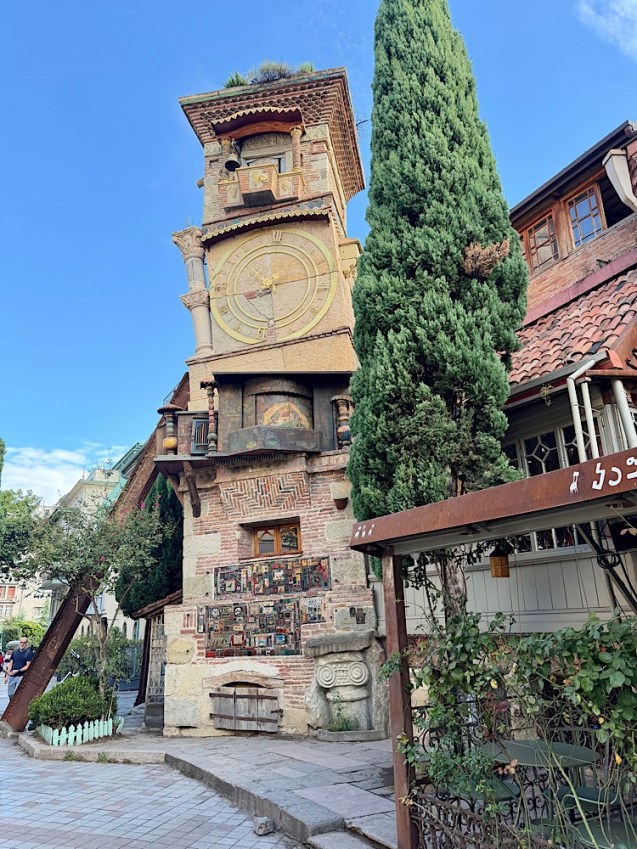
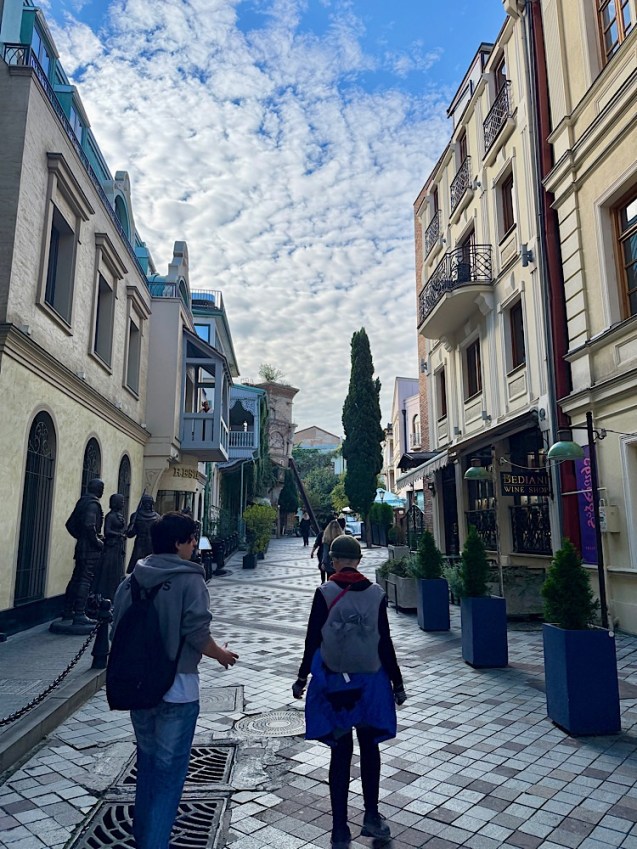
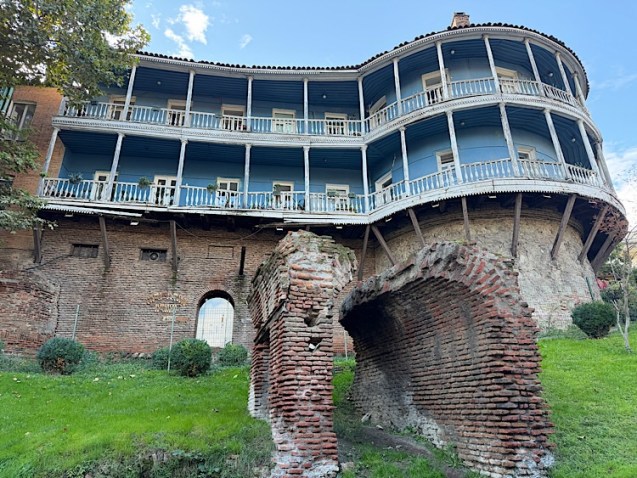
One day Luka led us through the winding streets of Old Tbilisi. There’s so much history here. From the discovery of hot springs to ancient churches and caravanseri you can wander for hours. A cable car ride took us to Narikala Fortress and amazing views of the city. We enjoyed a traditional lunch and then opted to take a boat ride up the Kira river for a different view.
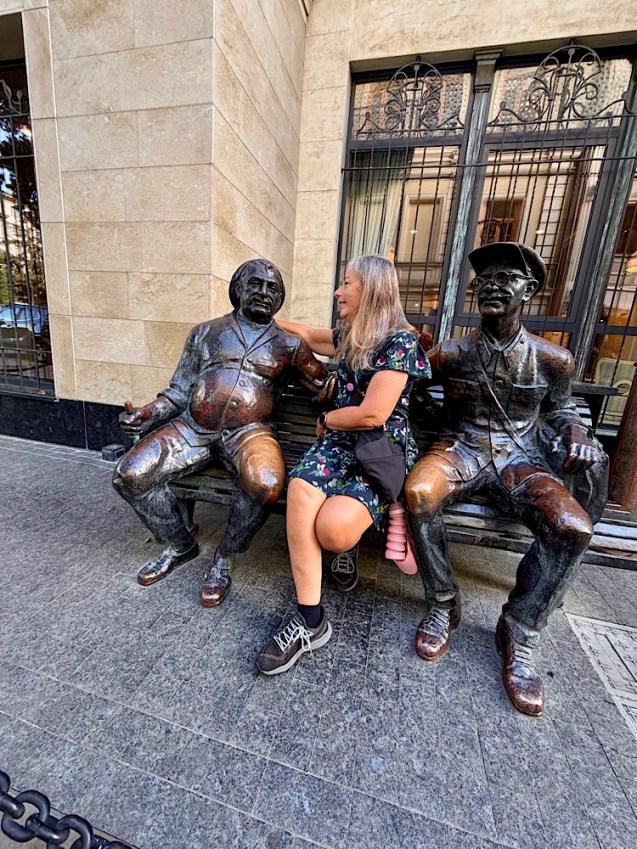
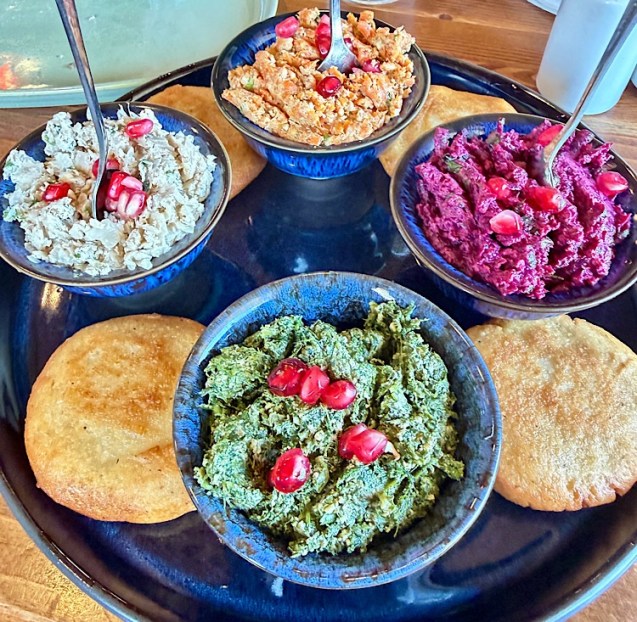
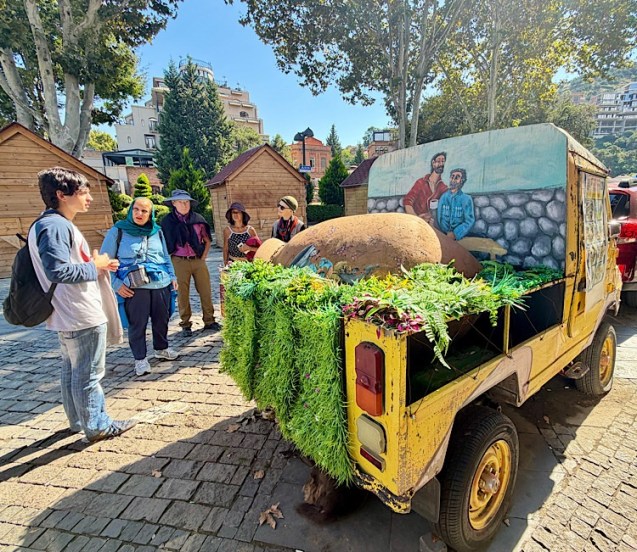
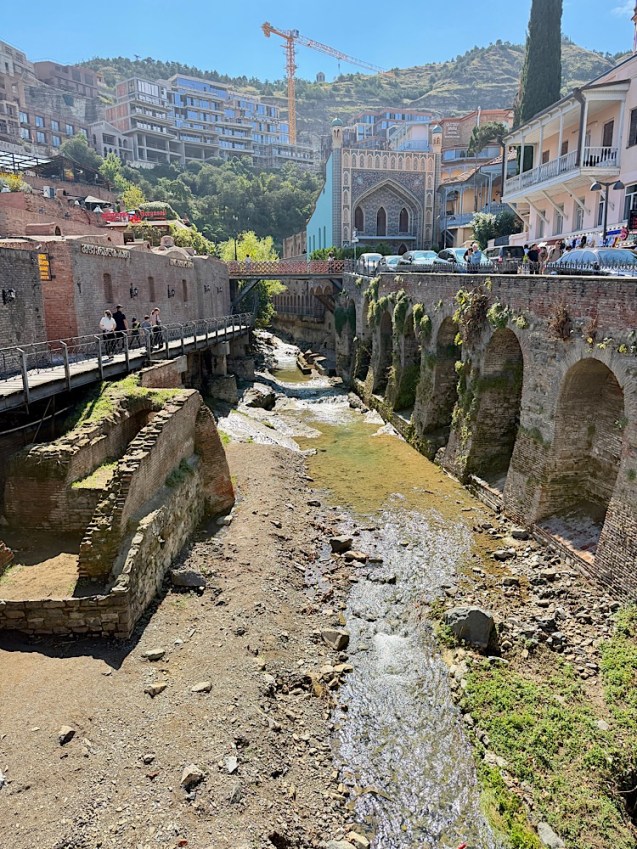
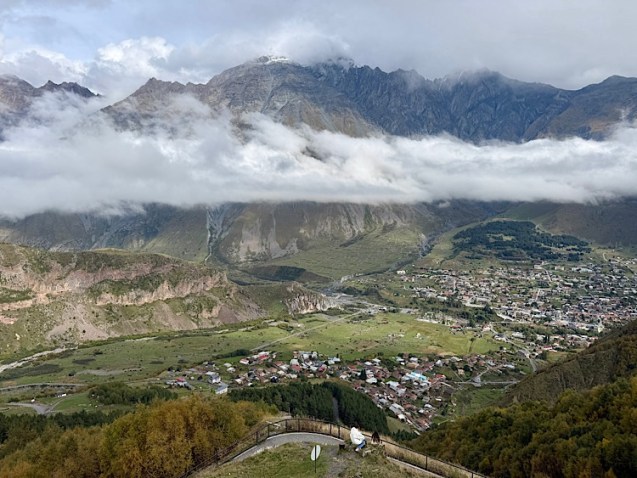
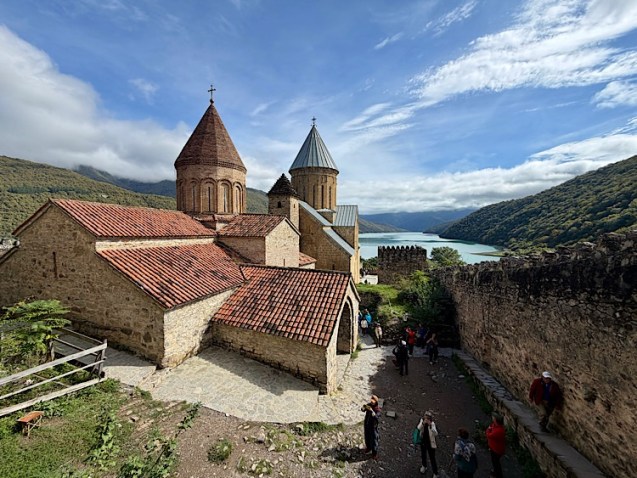
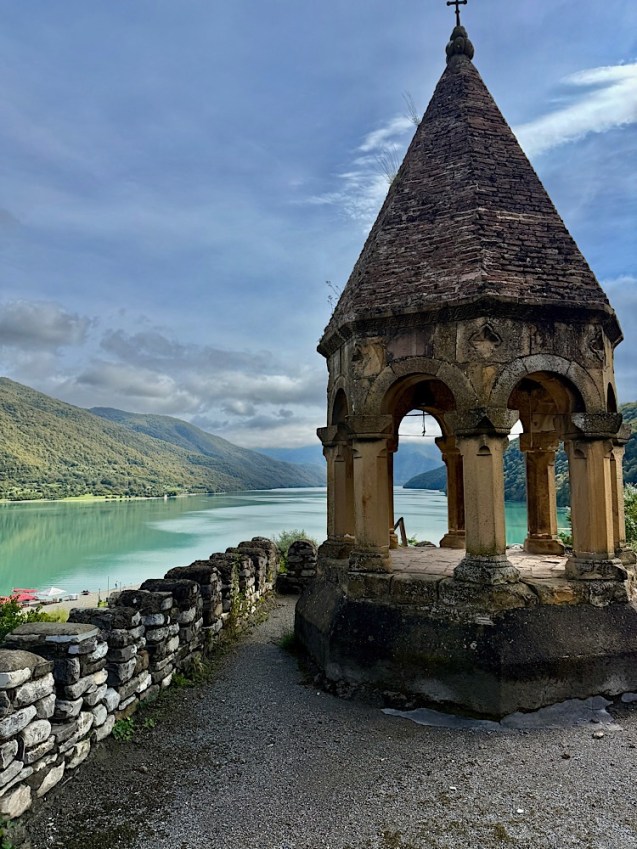
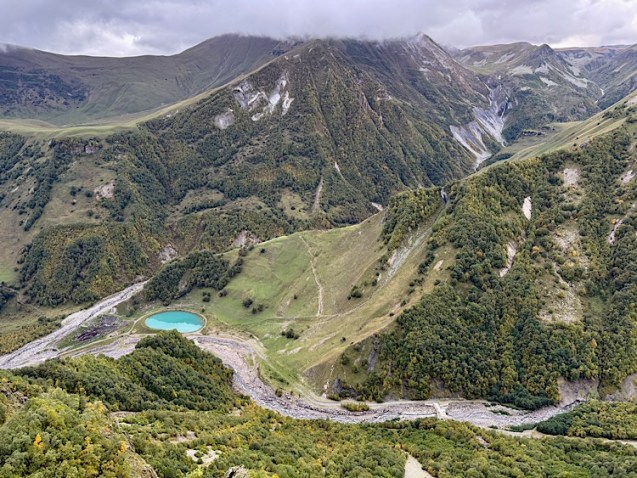
Thursday was a big drive up into the mountains along the old military road which is a famous tourist track now. The highest is over 5,000 metres and most days is hiding behind clouds. Today was no exception. We visited the Ananuri complex which dates back to the 16th century and different than anything I’ve seen elsewhere.
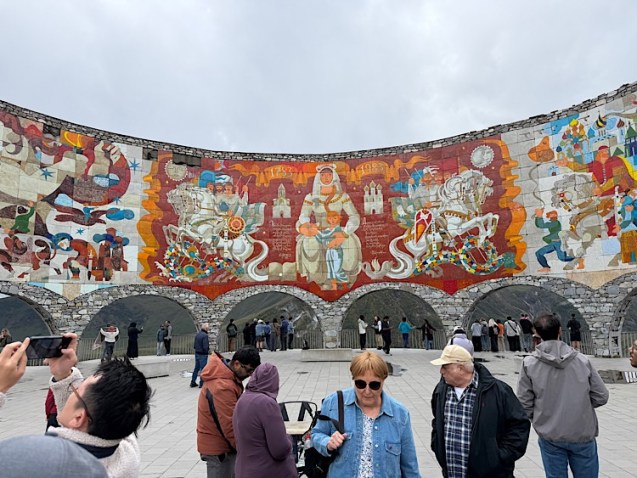
A stop for a view of the magnificent vistas was next and an explanation of the “so called” friendship monument between Georgia and Russia.
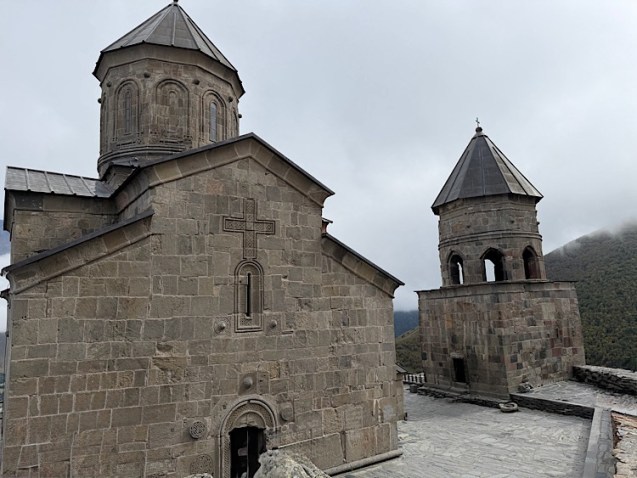
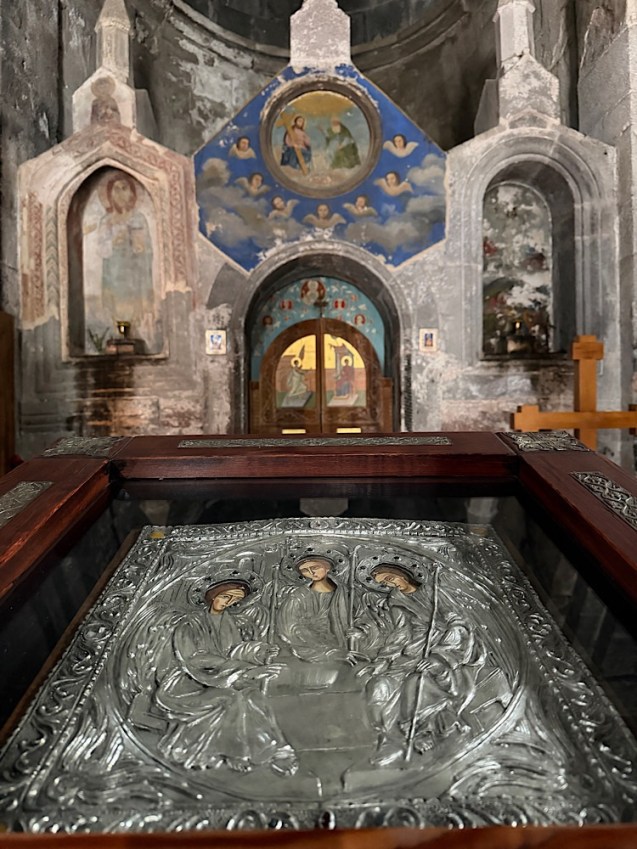
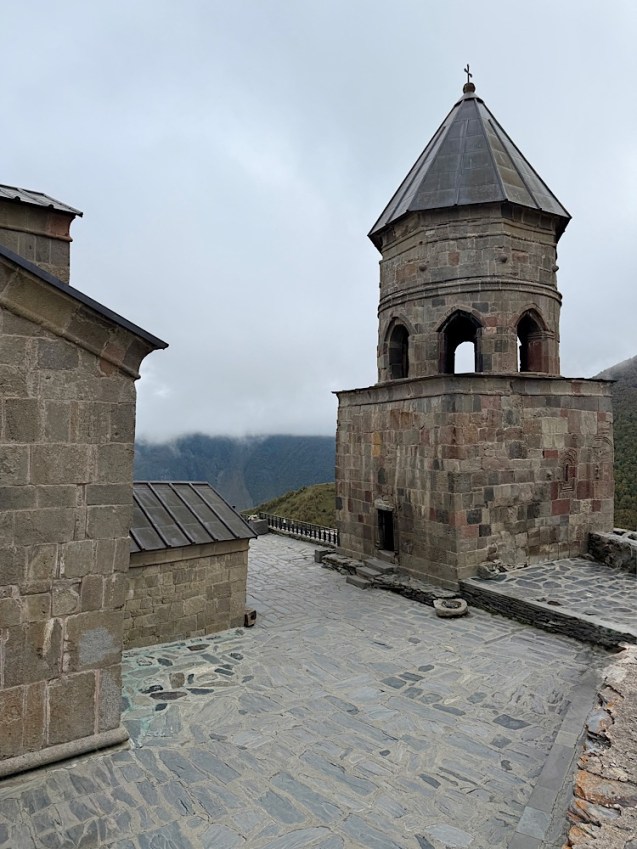
After a lunch break where we sampled the local Khinkali and carried on to Kazbegi in a 4WD, a necessity on the steep mountain road. Gergeti Trinity church is interesting but the location is what makes it spectacular. On good days you can see the glacial top of Mount Kazbegi.
Navigating the traffic back to Tbilisi is not for the faint of heart.
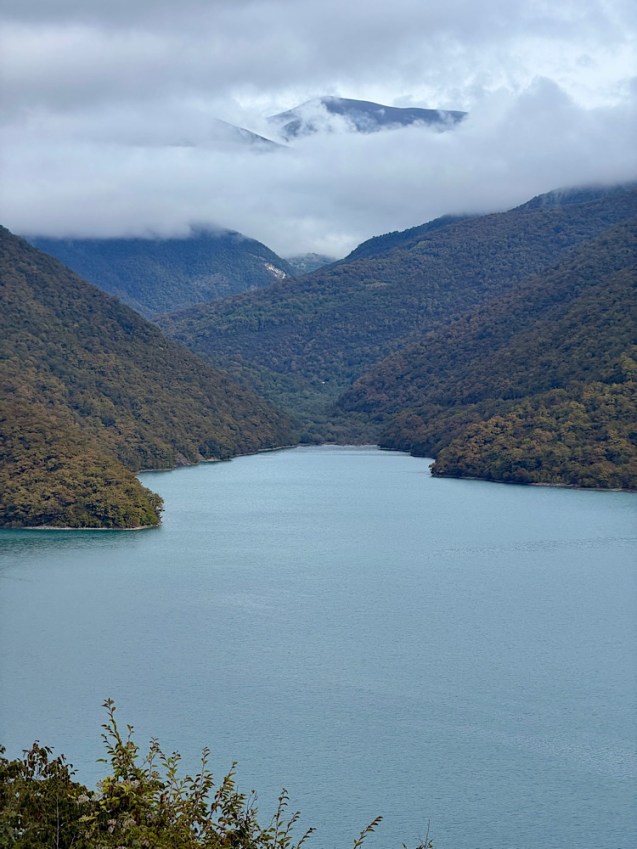
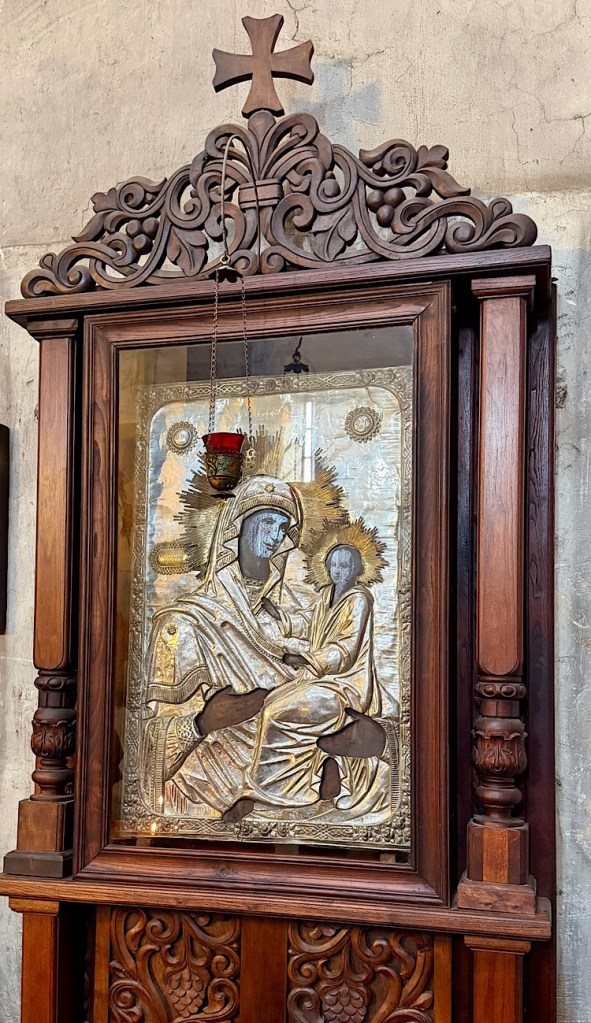
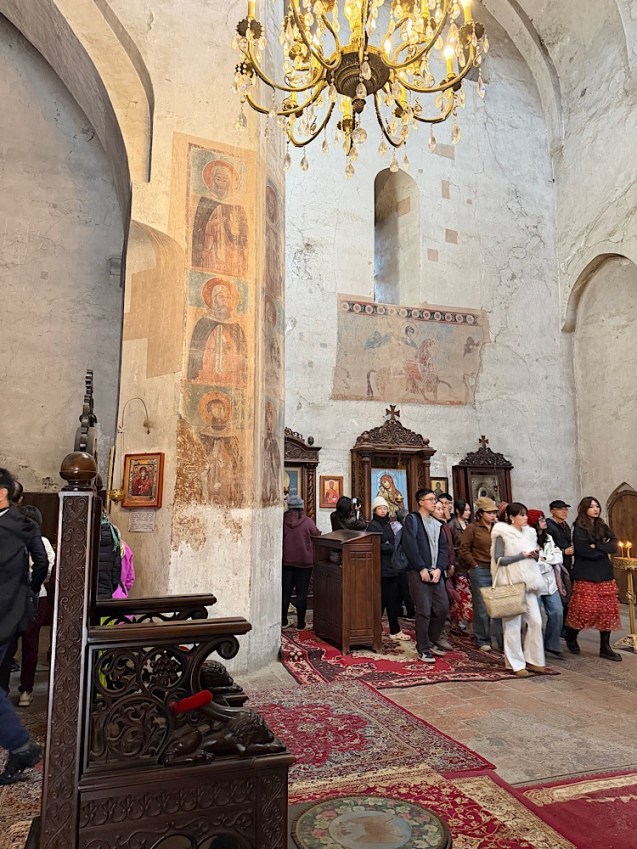
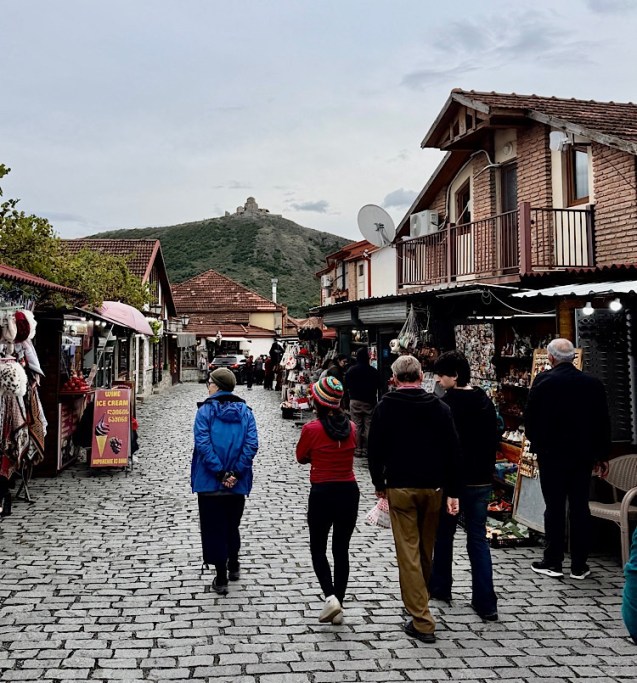
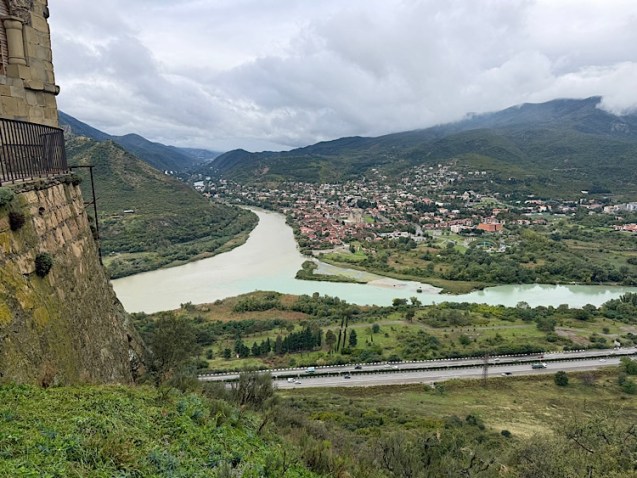
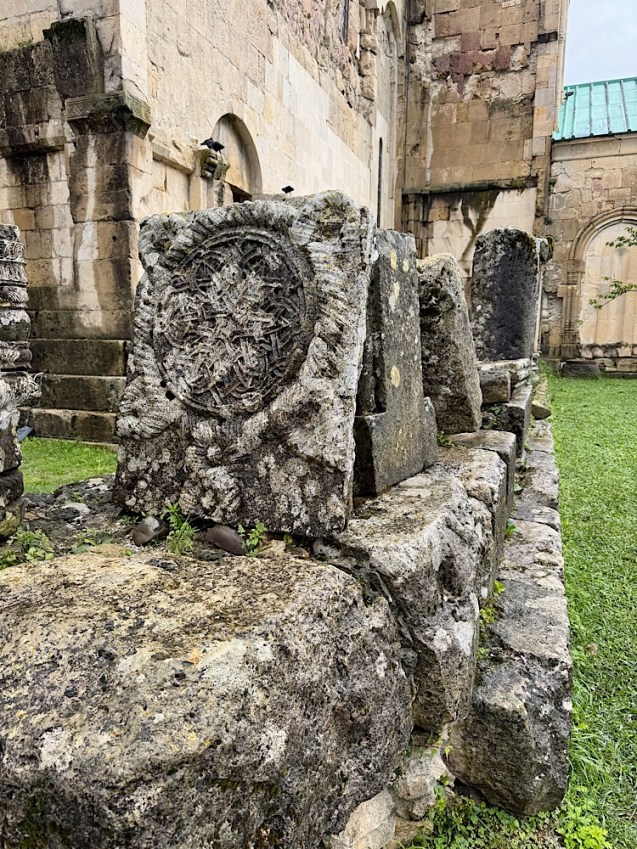
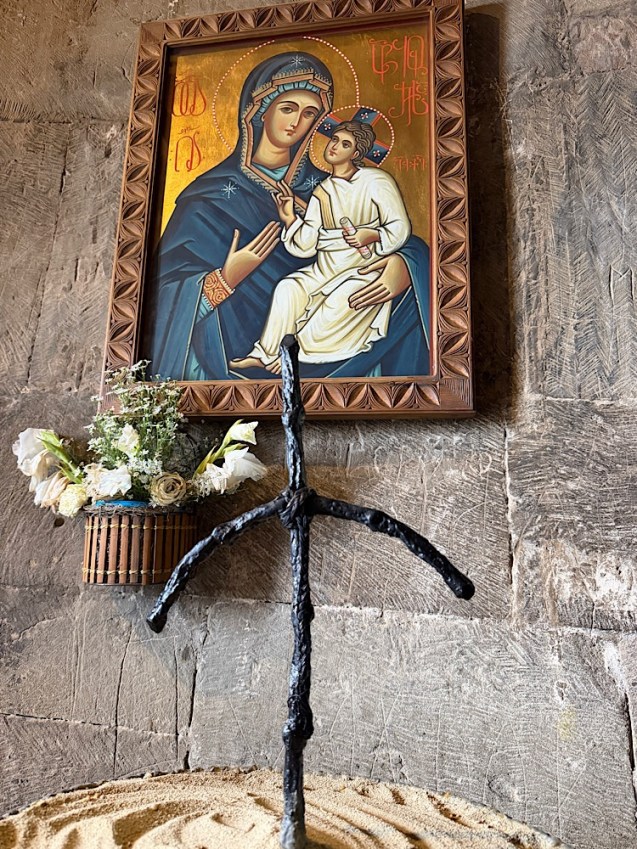
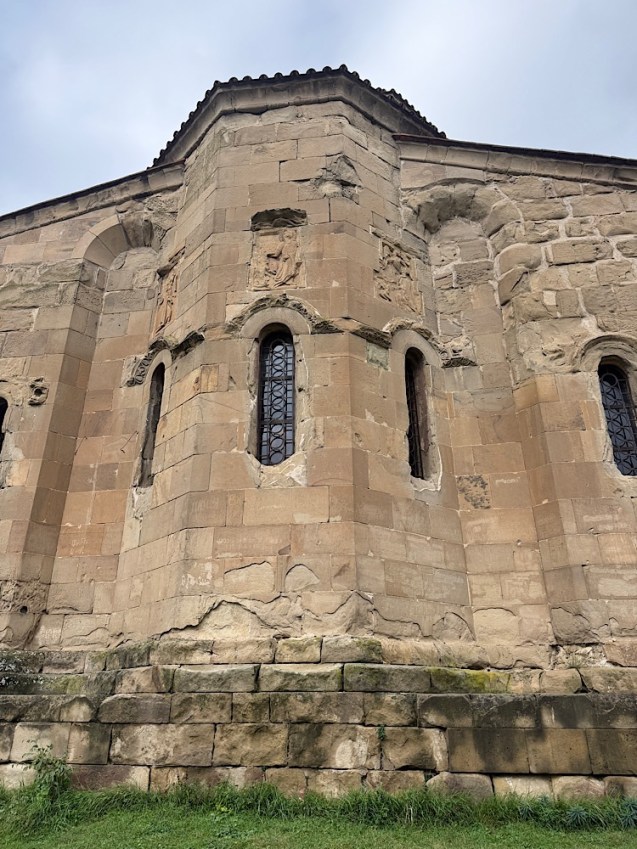
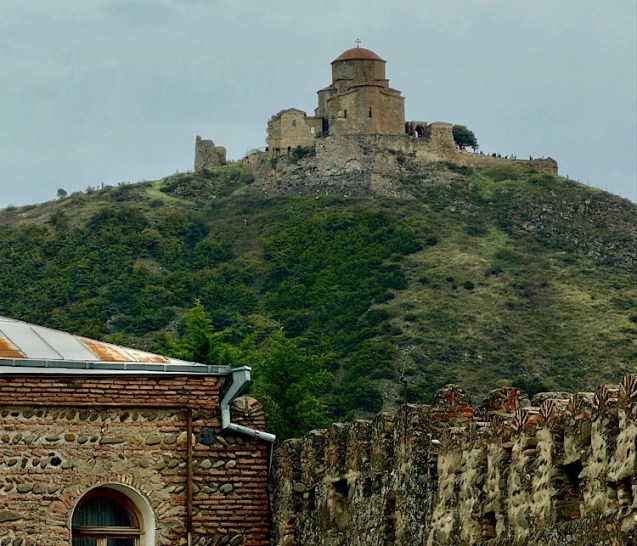
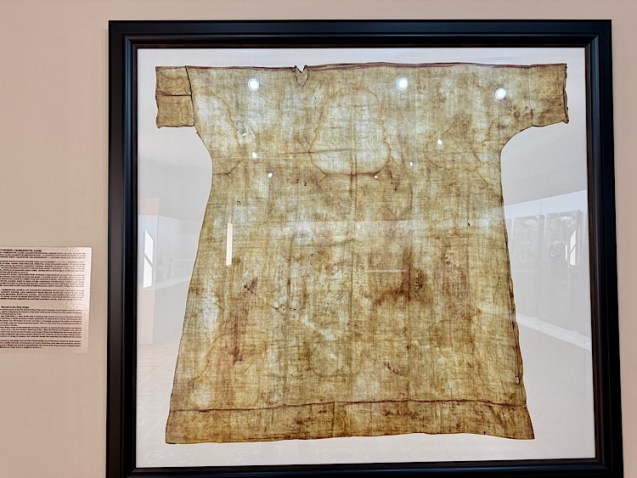
Friday we visited Mtskheta, once the capital of the early Georgian Kingdom of Iberia. More UNESCO world heritage sites can be found here. The Jvari Monastery is home to the robe of Jesus Christ, brought here in the first century from Jerusalem
Svetitskhovei is the largest surviving church building in Georgia and the centre of Christian Georgia for centuries.
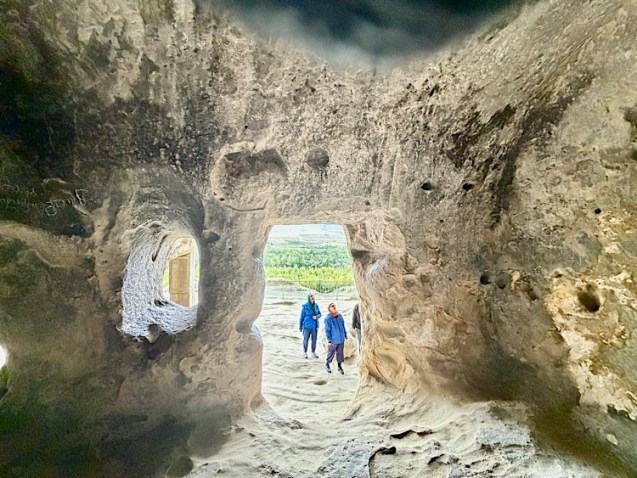
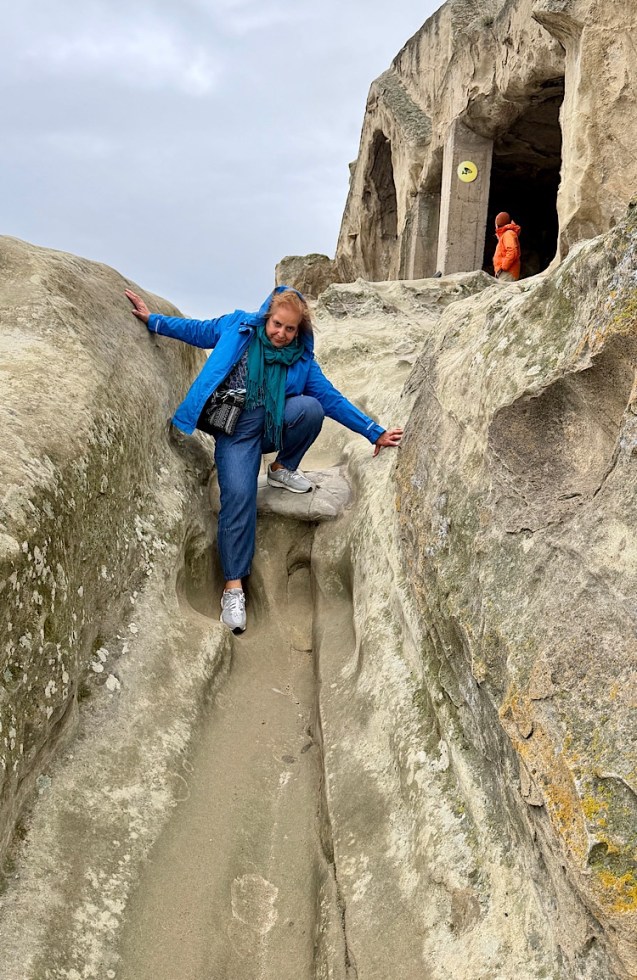
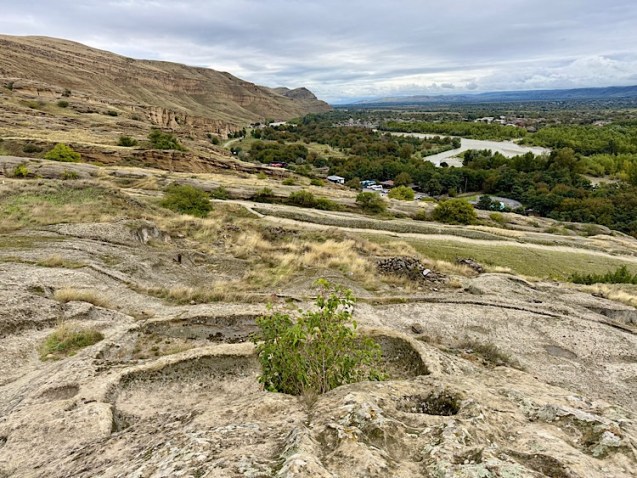
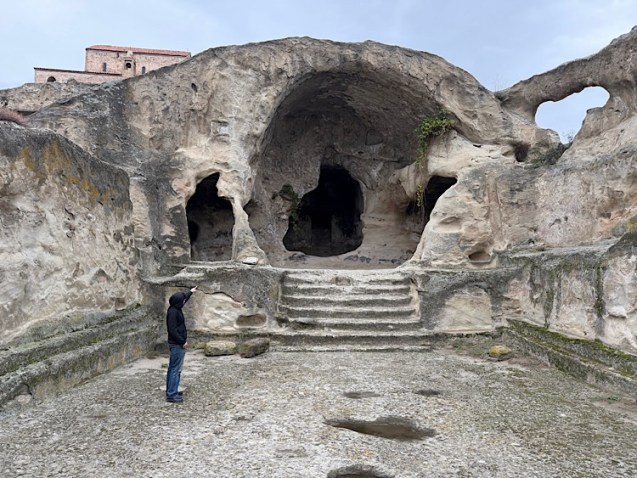
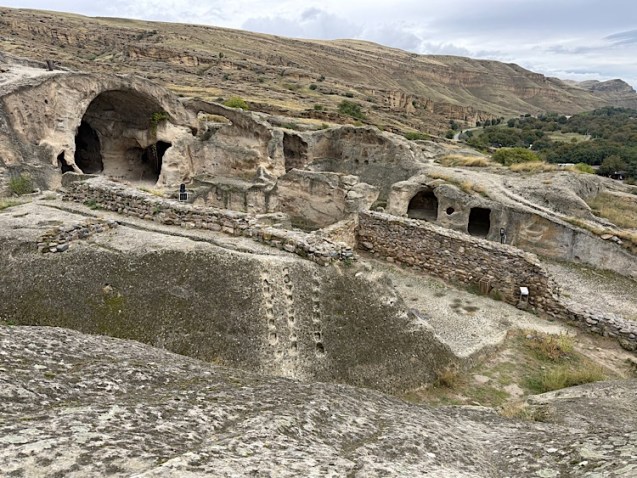
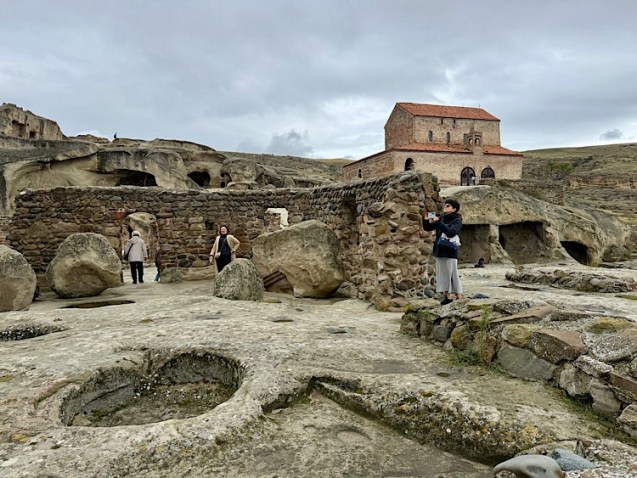
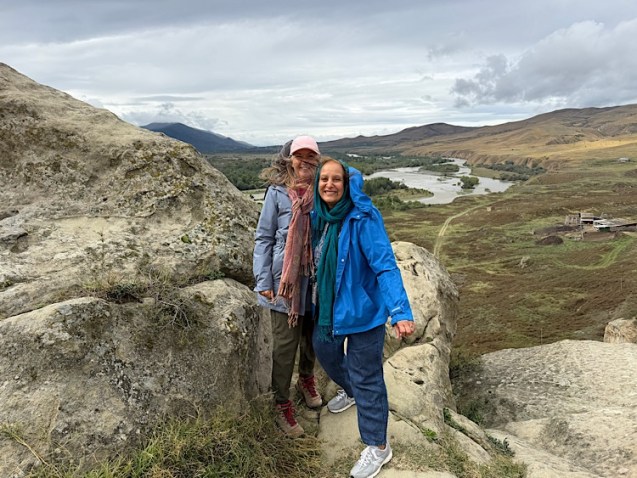
A highlight was the Uplistsikhe cave town. There are many unique rock cut outs, caves and structures that are a combination of Pagan and Christian architecture.
KUTAISI
Saturday. We weren’t sad to leave the insanity that is Tblisi traffic as we headed to Kutaisi. The road to the West is recent. Tunnels built through the mountains have made the trip several hours shorter than it used to be.
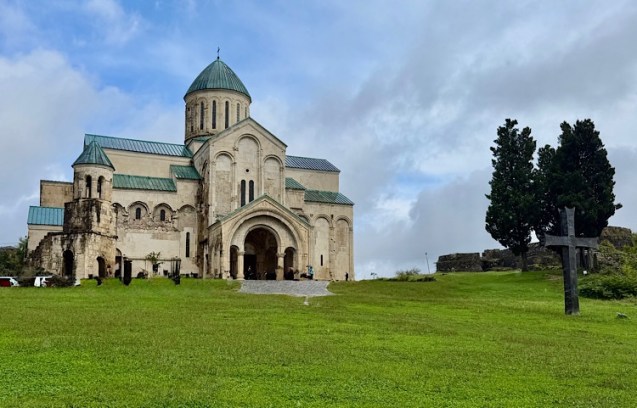
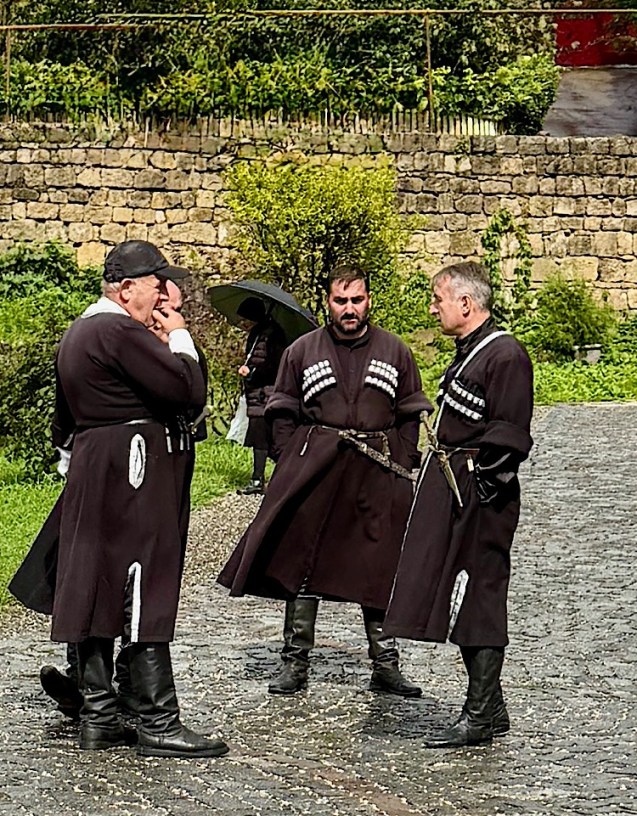
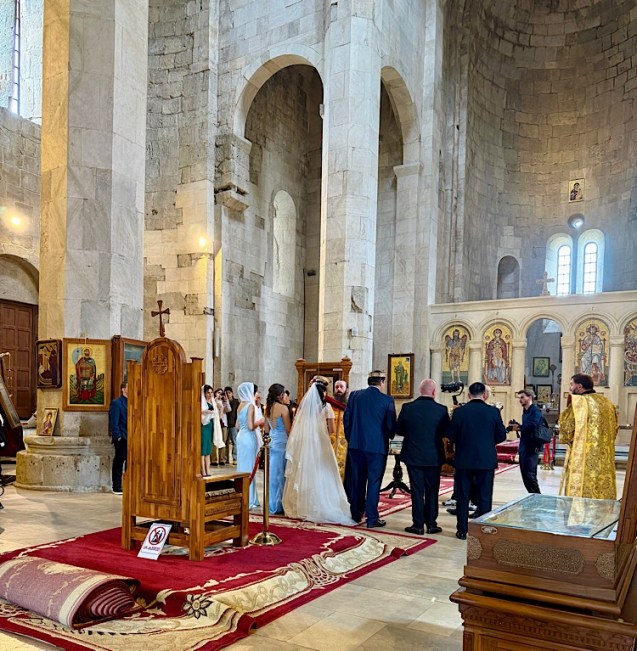
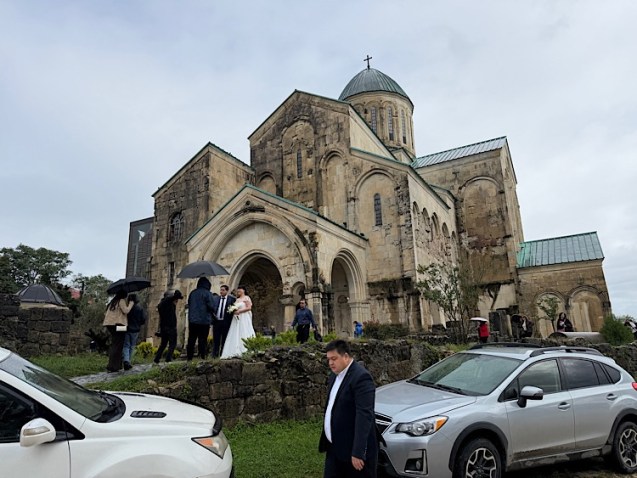
The Bagrati Cathedral was build by King David in the 11th century. It’s a magnificent structure and remnants of a Pagan building are still standing as well. Witnessing a few weddings was a highlight here. The views are amazing as well. The rain didn’t dampen our awe.
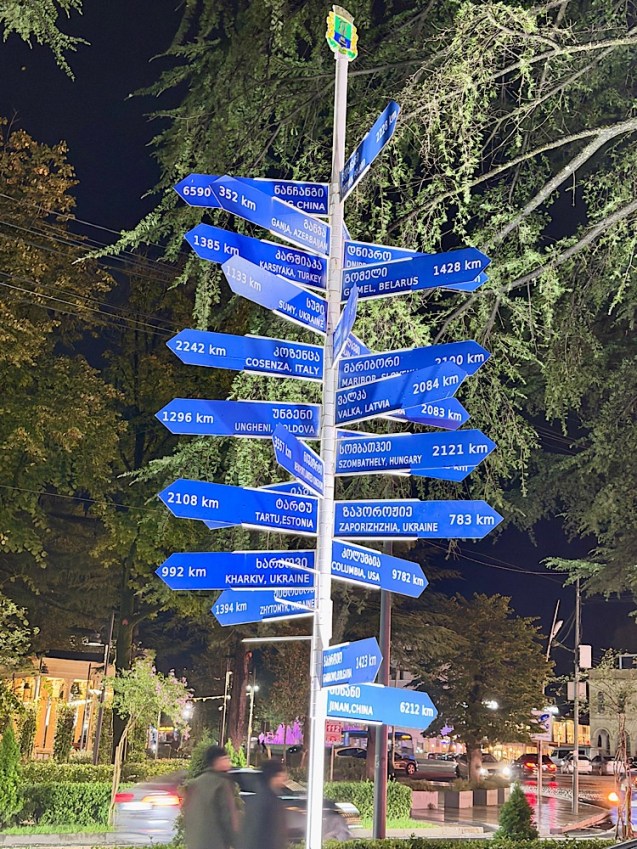
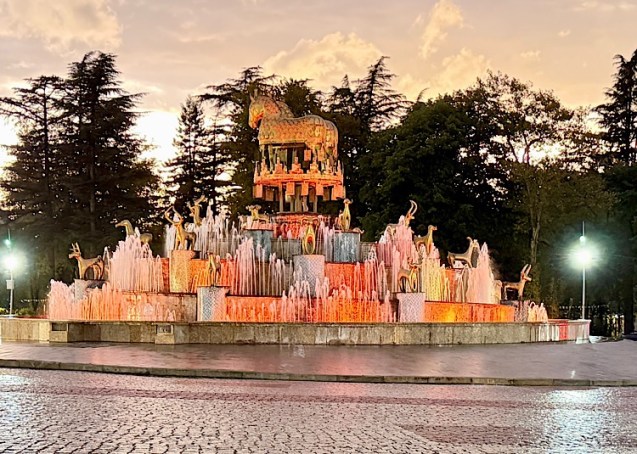
Kutaisi is the second largest city in Georgia but seems VERY tame next to Tblisi. There’s a fascinating fountain in its centre. Lunch here was traditional West Georgian food Including a salad of cucumbers and tomatoes which is a staple in Georgia. This one had a crushed walnut dressing that was delicious. The meat and potato dish cooked in clay pots was really tasty as well. We haven’t met a meal we didn’t like yet. No weight will be lost on this trip.
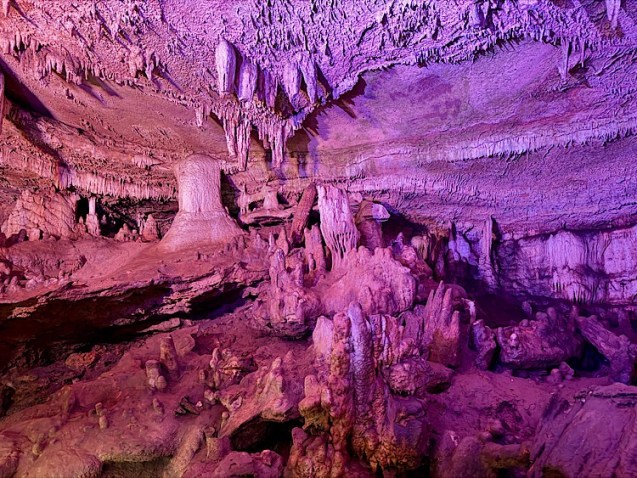
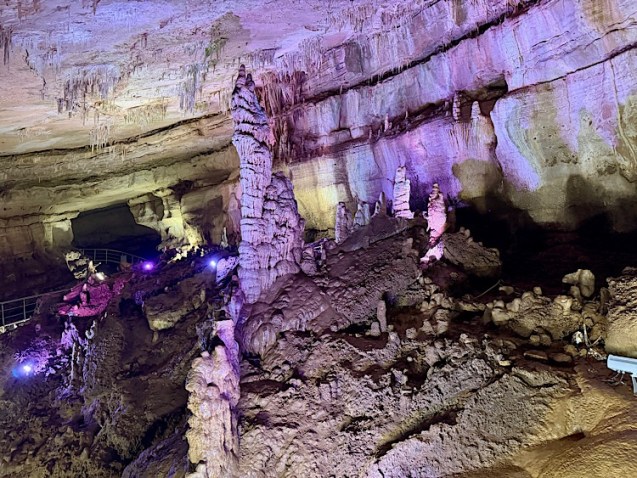
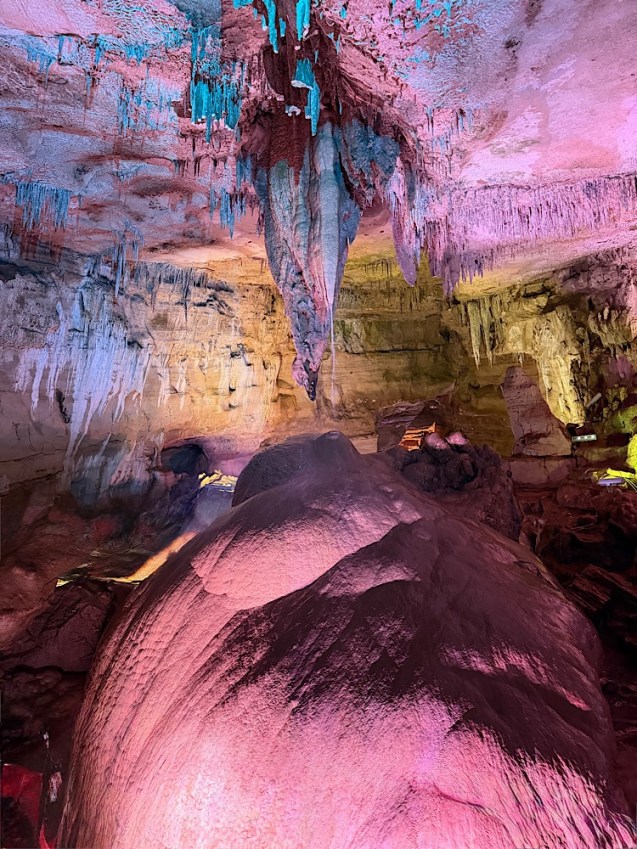
The Sataplia Nature reserve is home to preserved dinosaur footprints, a beautiful woodland walk and an impressive cave system.
MESTIA
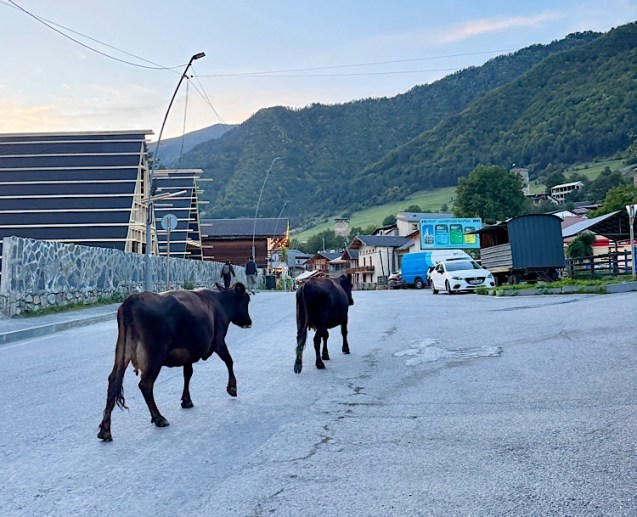
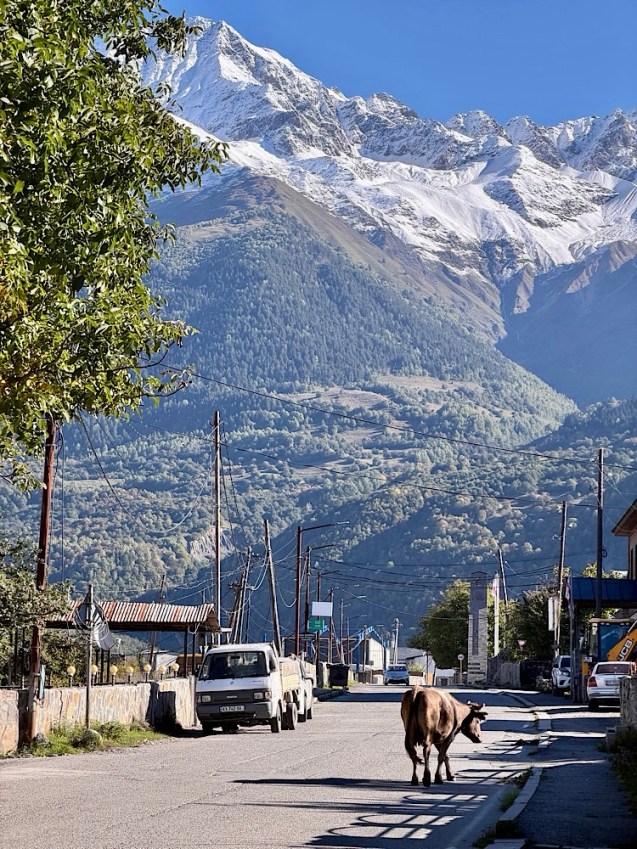
Sunday: Driving into Western Georgia is not for the faint of heart. The road wends up and around mountains, at times dropping off and others dodging landslides. Often there are livestock traffic jams with lots of cows, some horses pigs and even some goats randomly walking on the road.
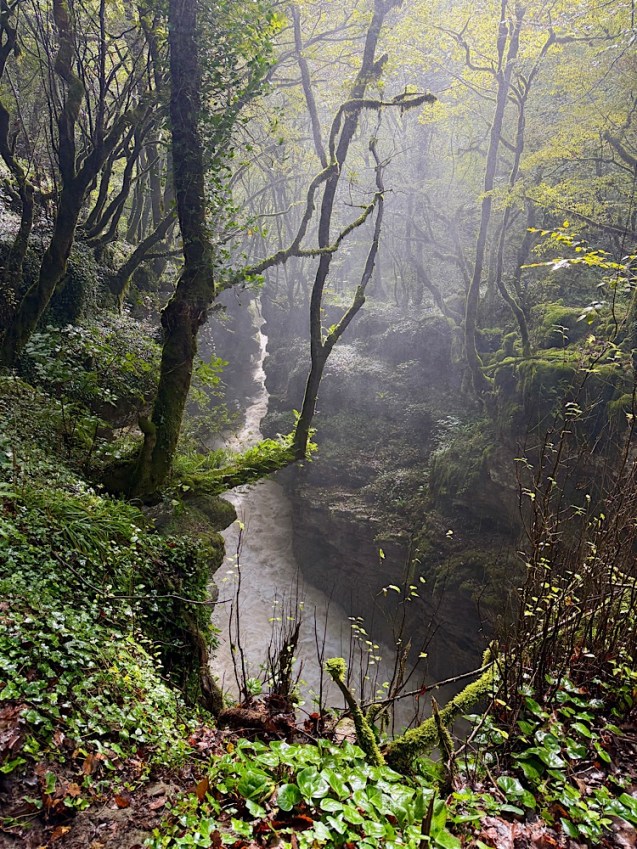
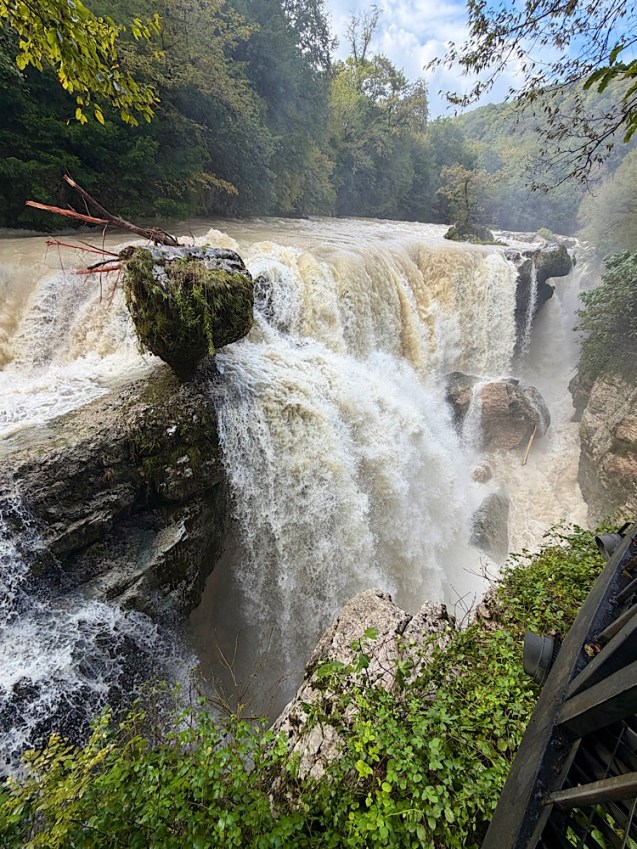
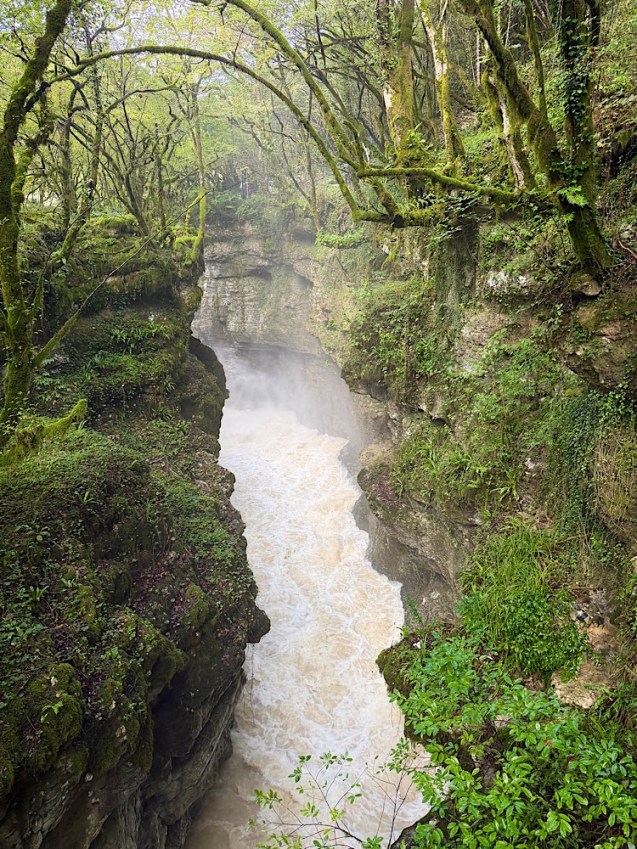
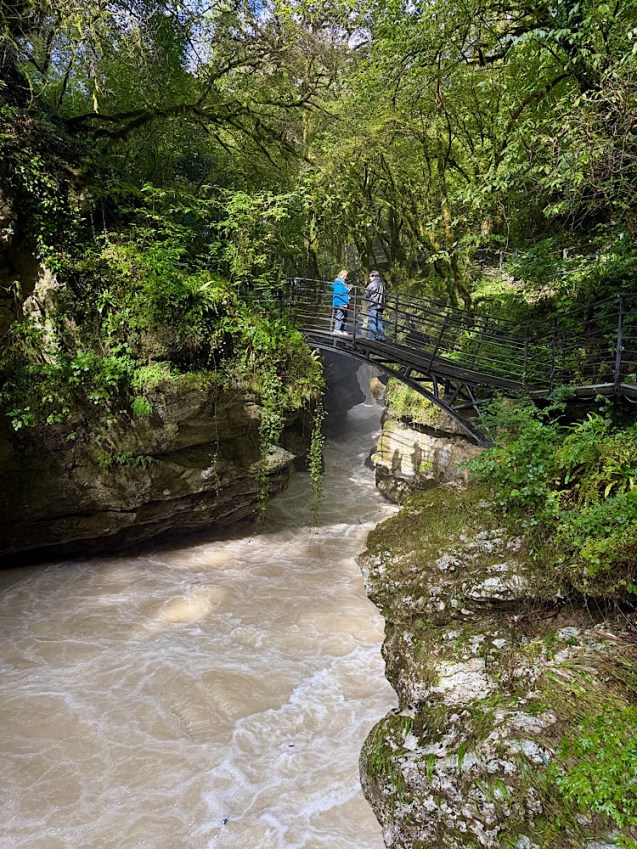
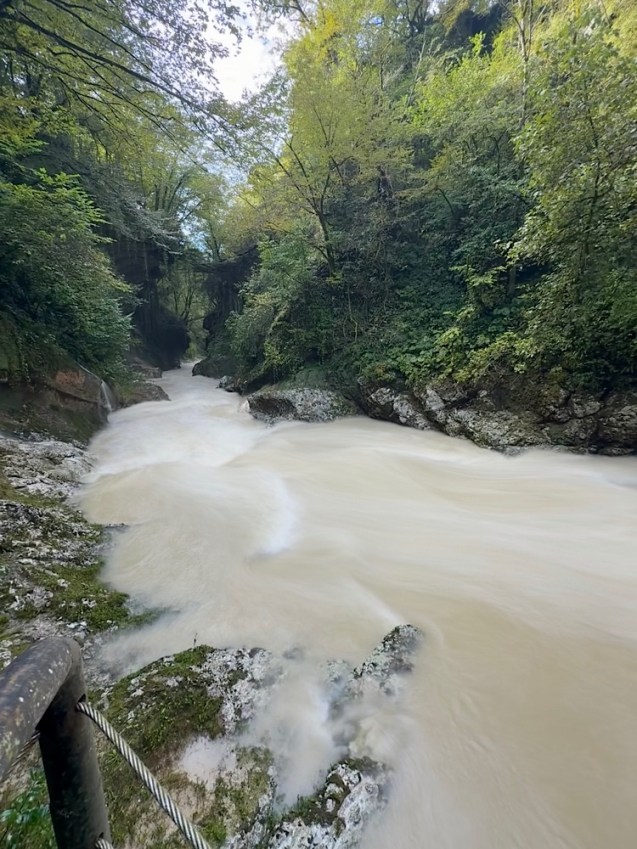
Stops along the way included a hike through the Marvili Canyon nature reserve. A boat ride was planned but cancelled as the water was way too high and the river was raging.
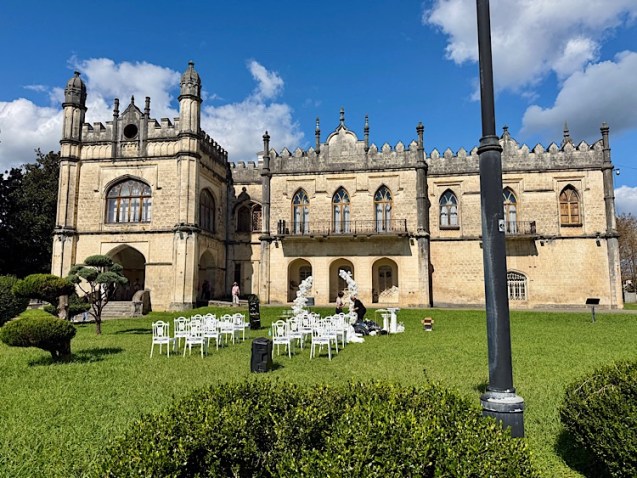
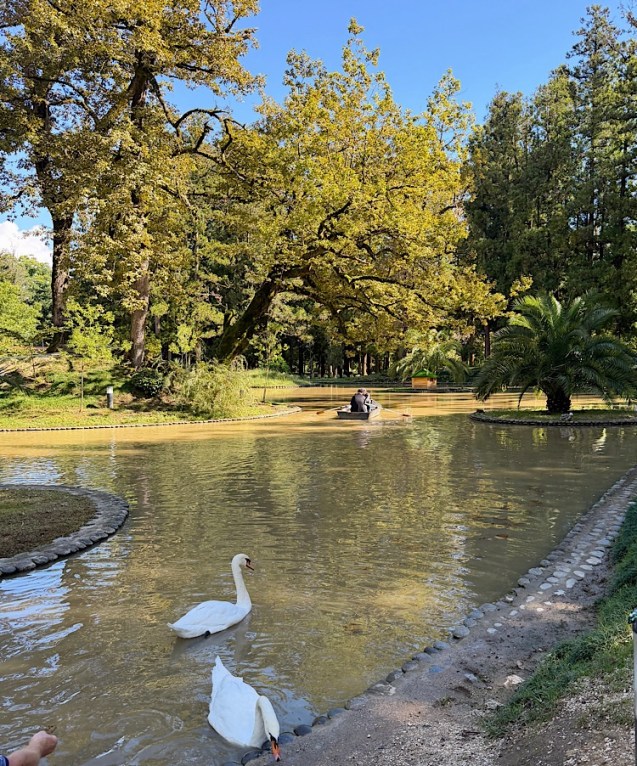
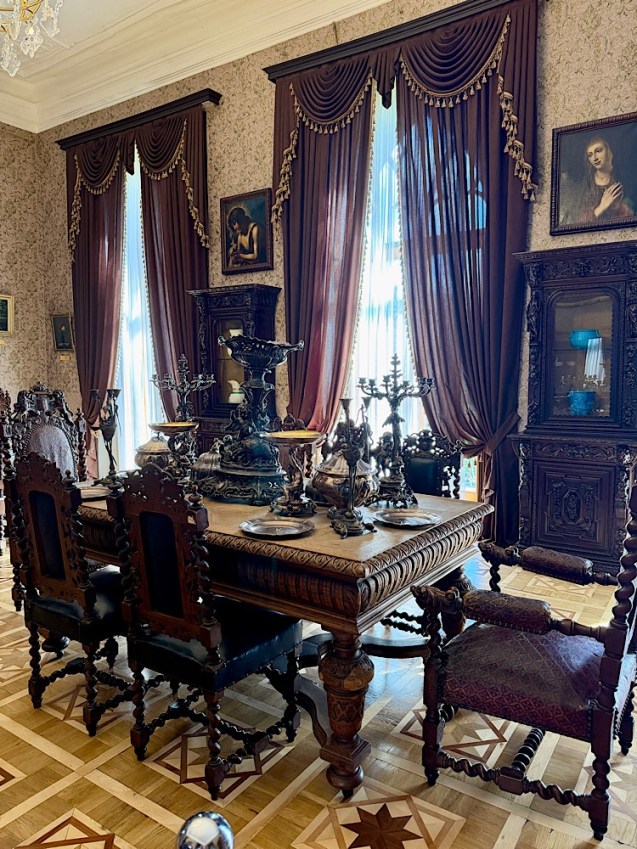
Next was the Dadiani Palace and botanical garden. I could have spent more time wandering the gardens.
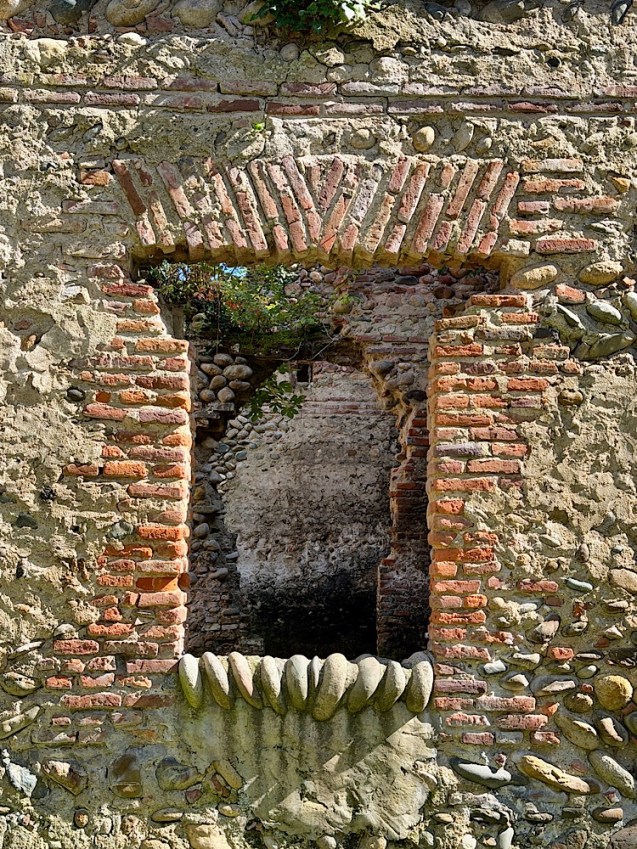
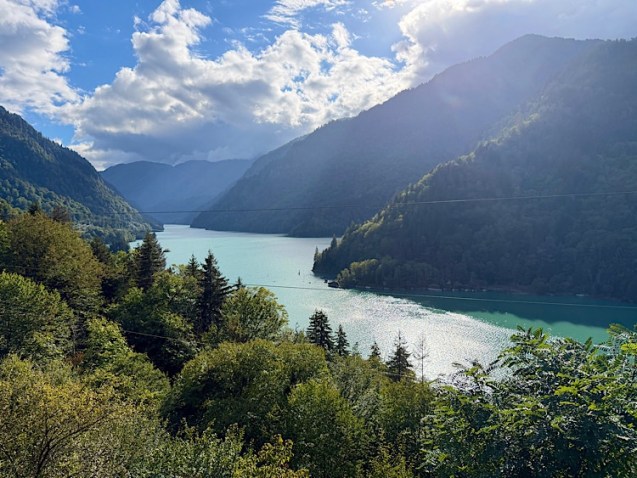
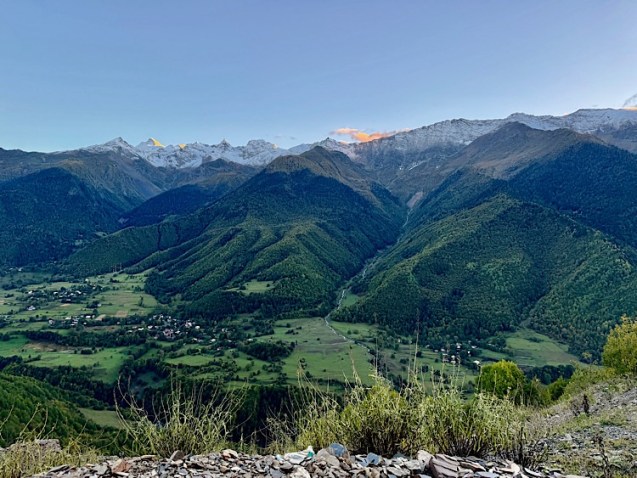
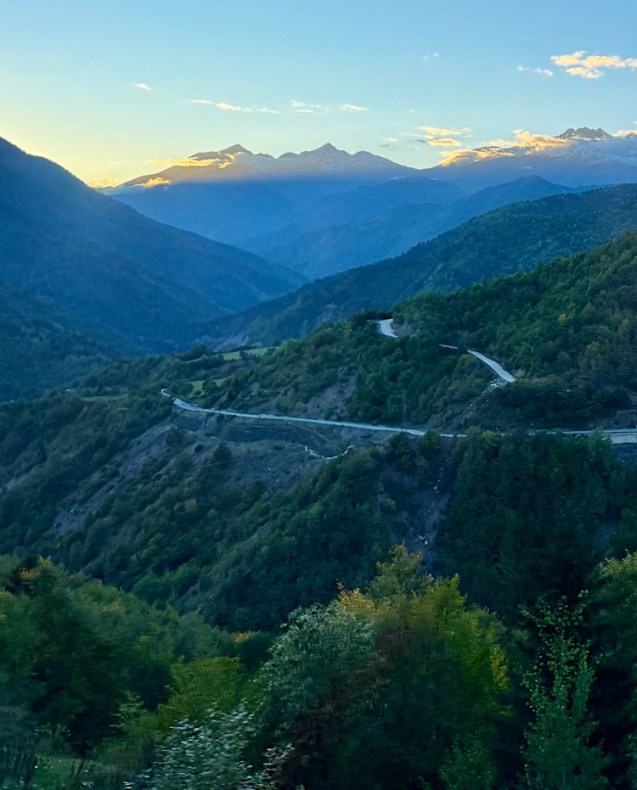
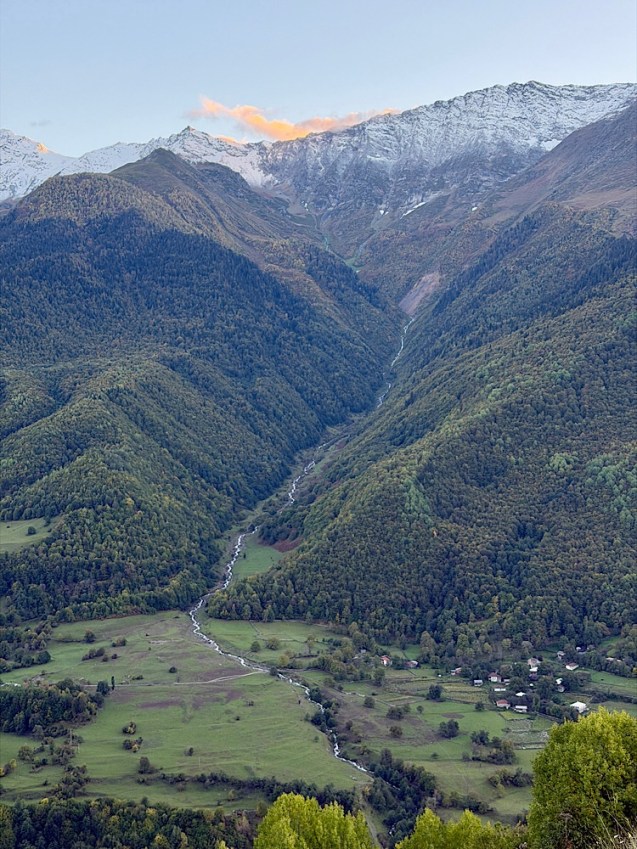
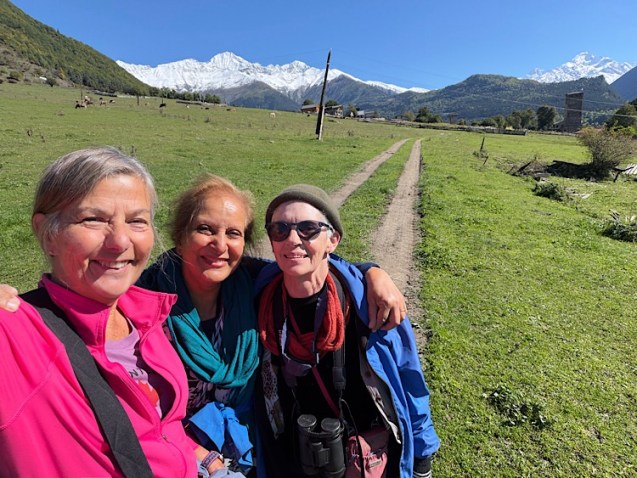
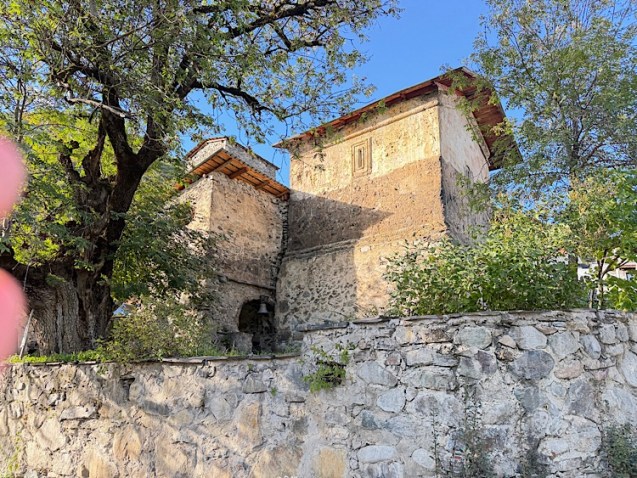
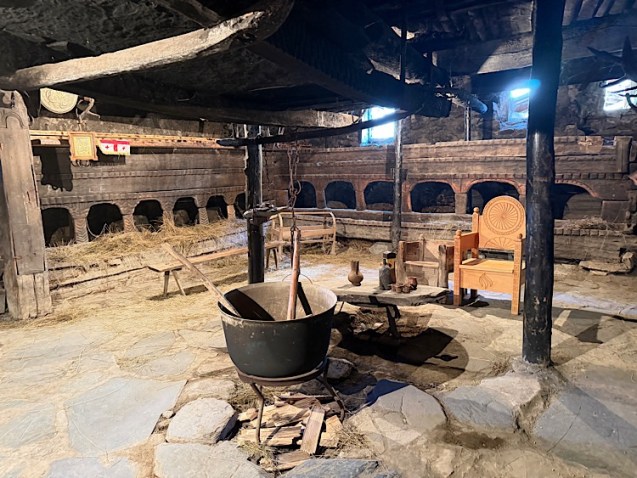
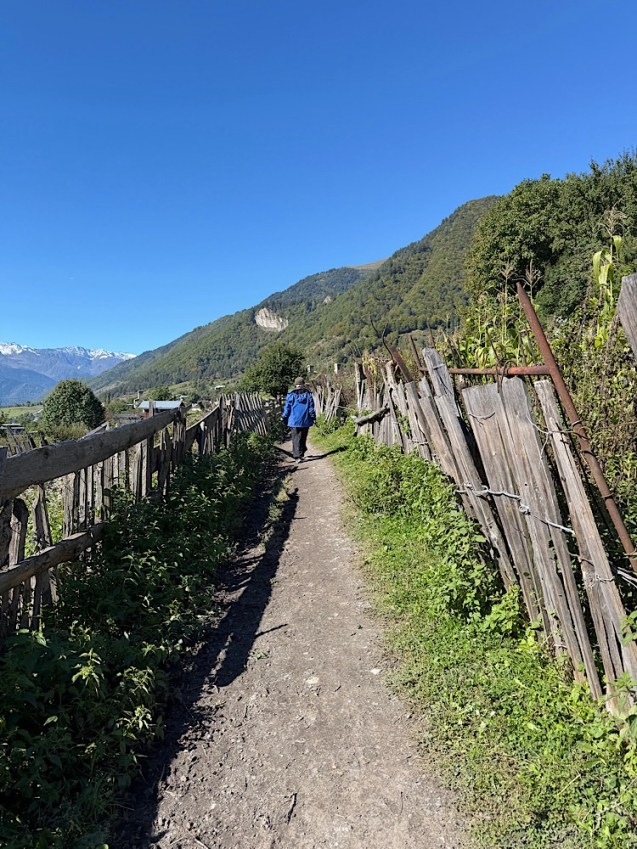
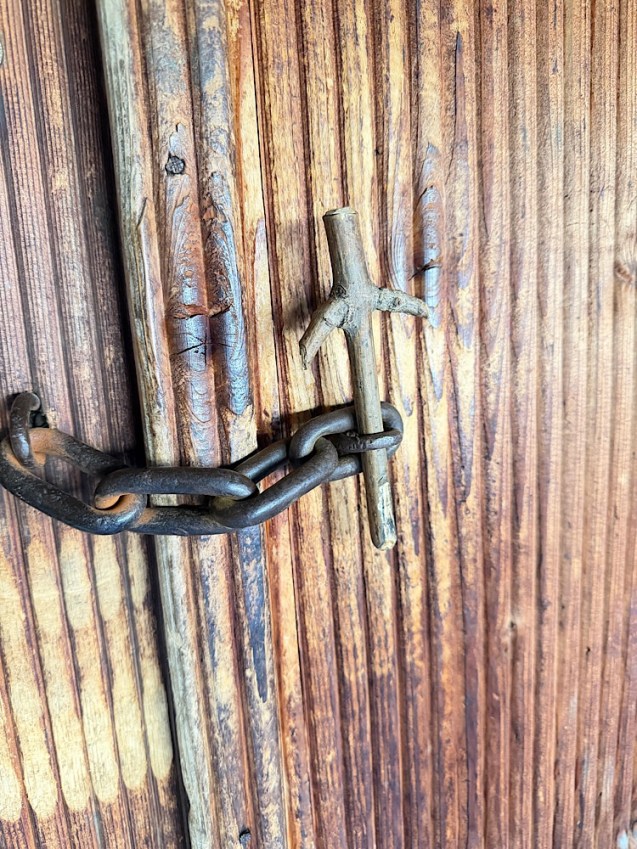
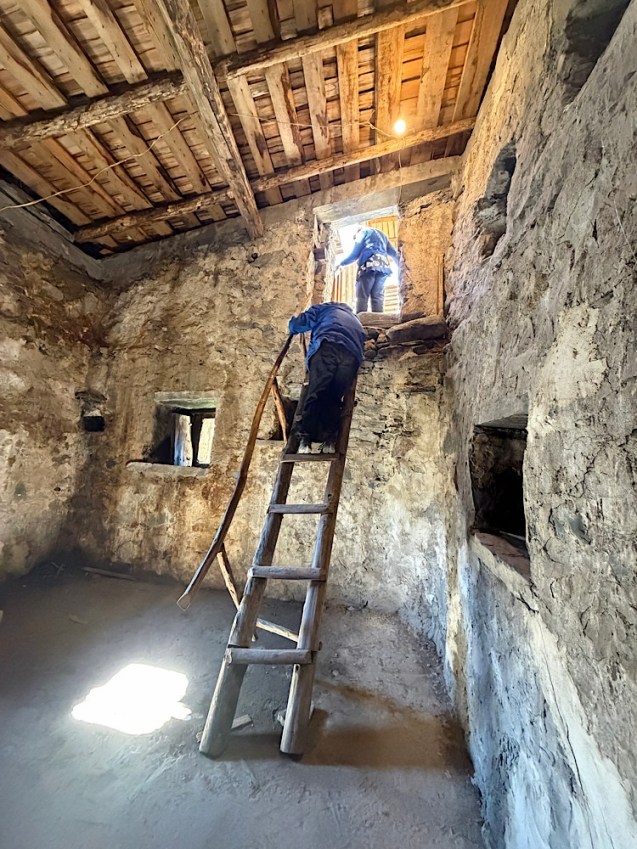
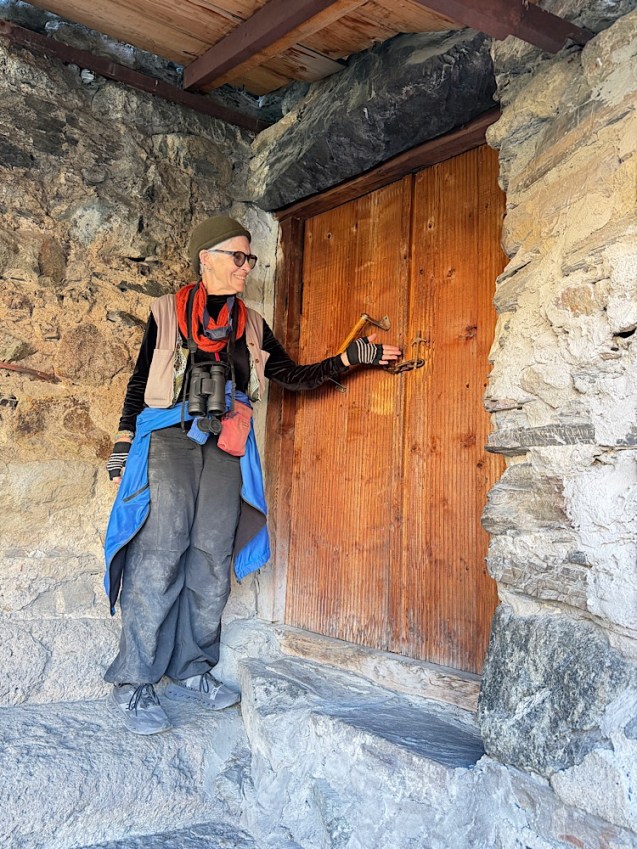
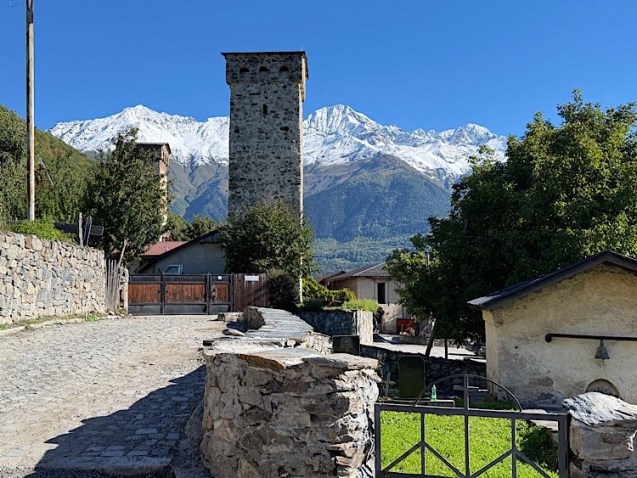
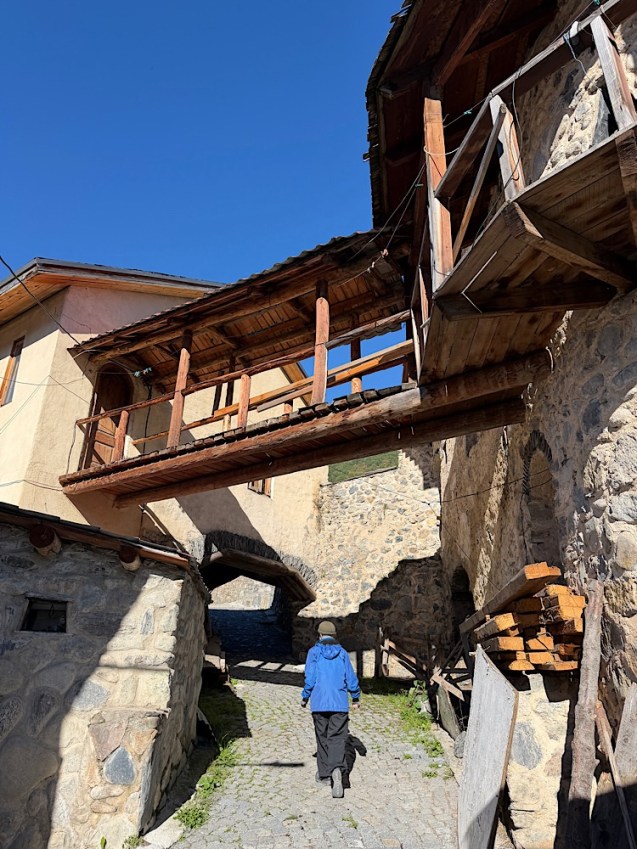
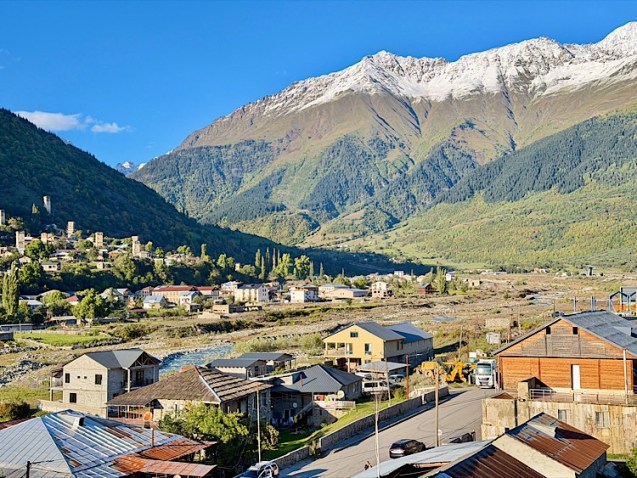
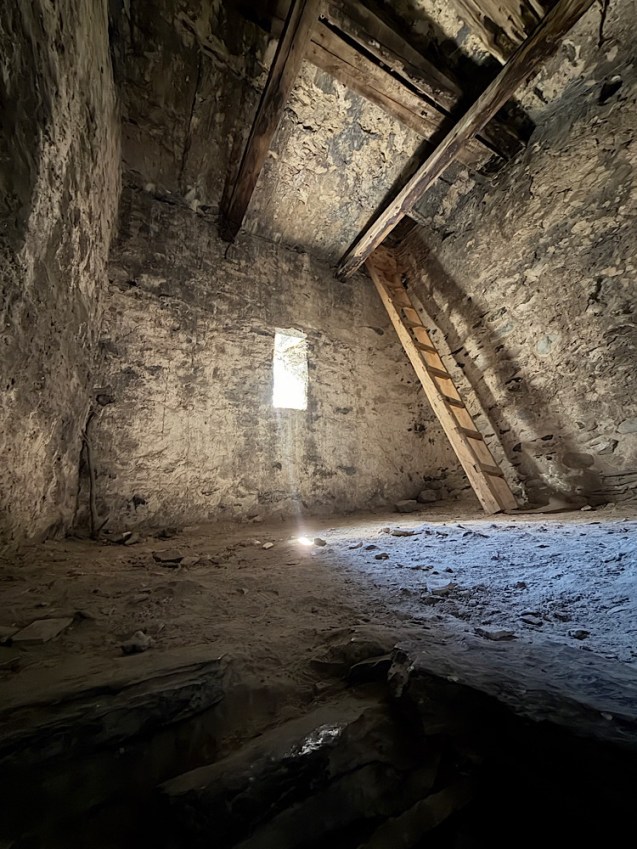
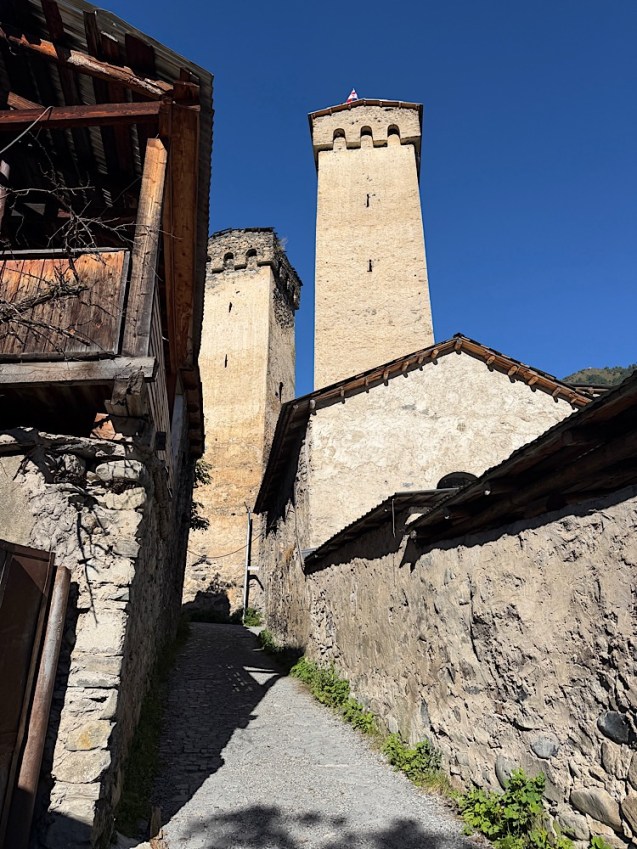
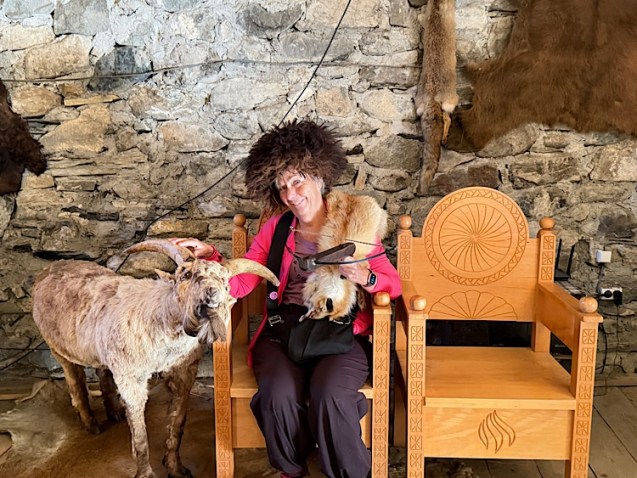
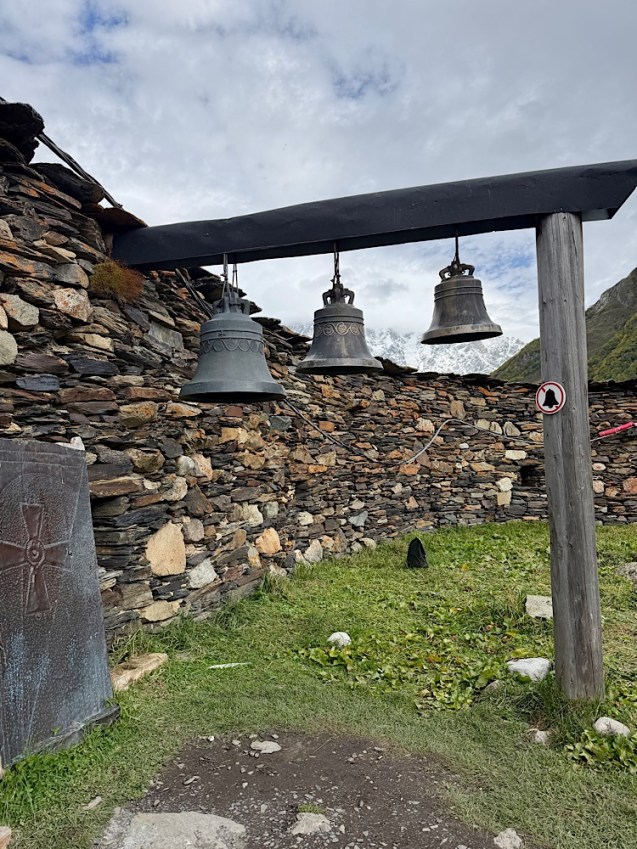
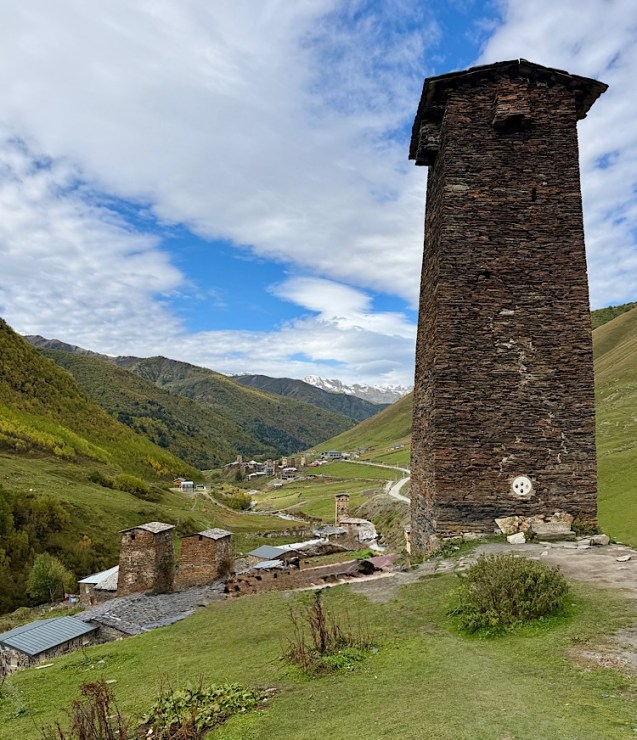
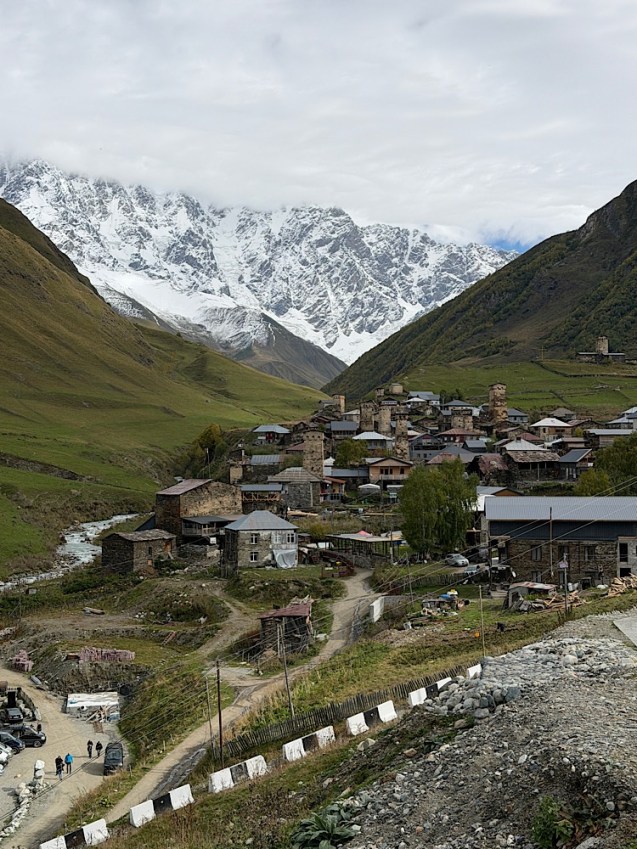
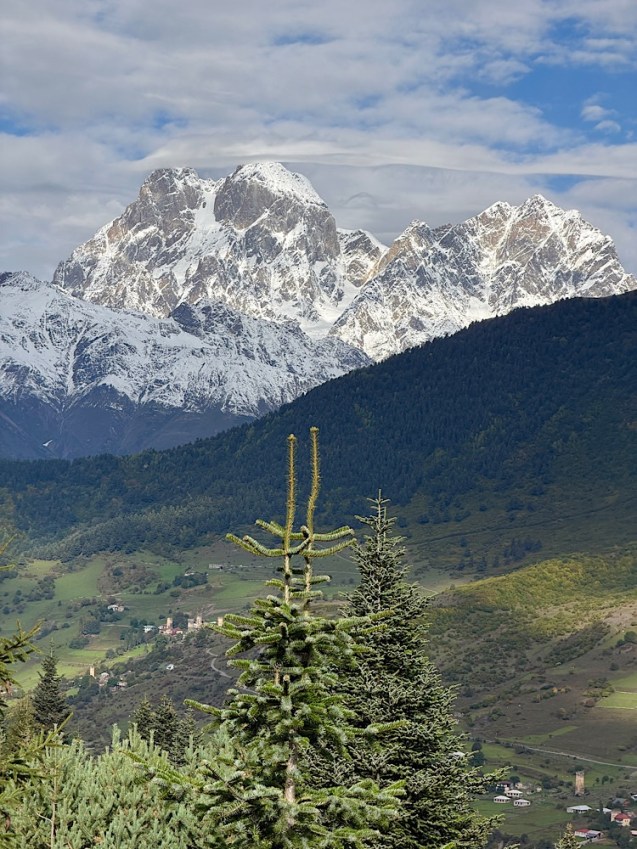
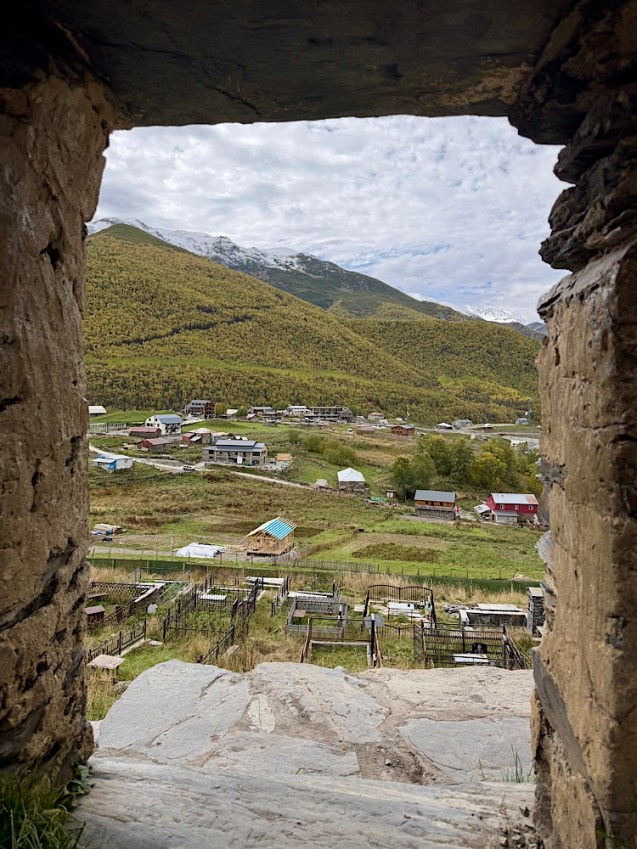
Monday: A full day exploring Mestia on our own was just what we needed. It started off a chilly 4 degrees but the mountain sun warmed up quickly and soon I was down to a tee shirt. Up and down the hills, we found several towers to climb. Many are in people’s yards so not open to the public. One is now a museum. The man’s grandfather had lived there. The Svan towers date back to 9th to 12th centuries. They’re clustered in several villages in the Upper Svaneti and are now UNESCO world heritage sites. 3-5 stories high and 20-25 metres with thick stone walls, they were built to protect against the elements and enemies. Families lived in the basement with their animals during the cold seasons and in the higher levels during summer.
We met the others for lunch in Mestia and enjoyed local Kinghali and a potato and cheese dish
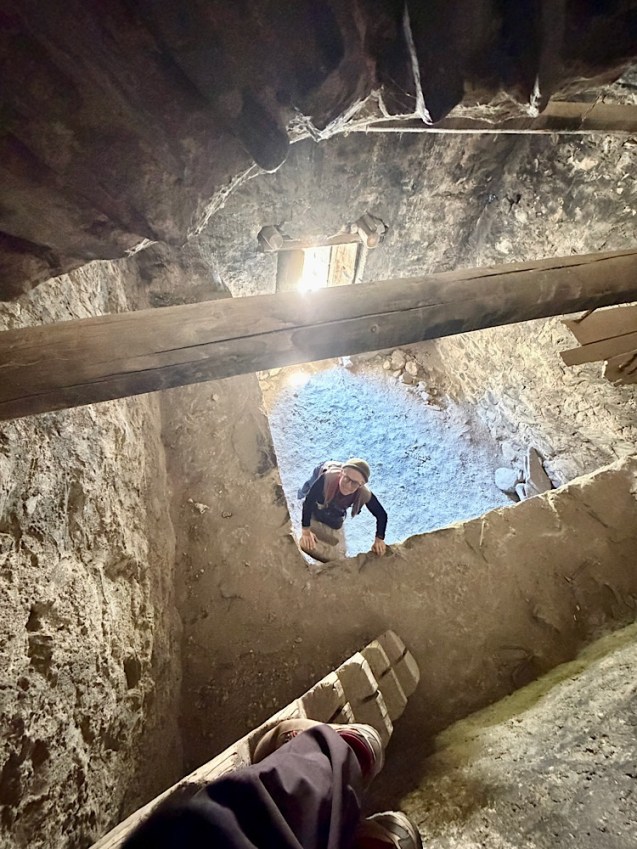
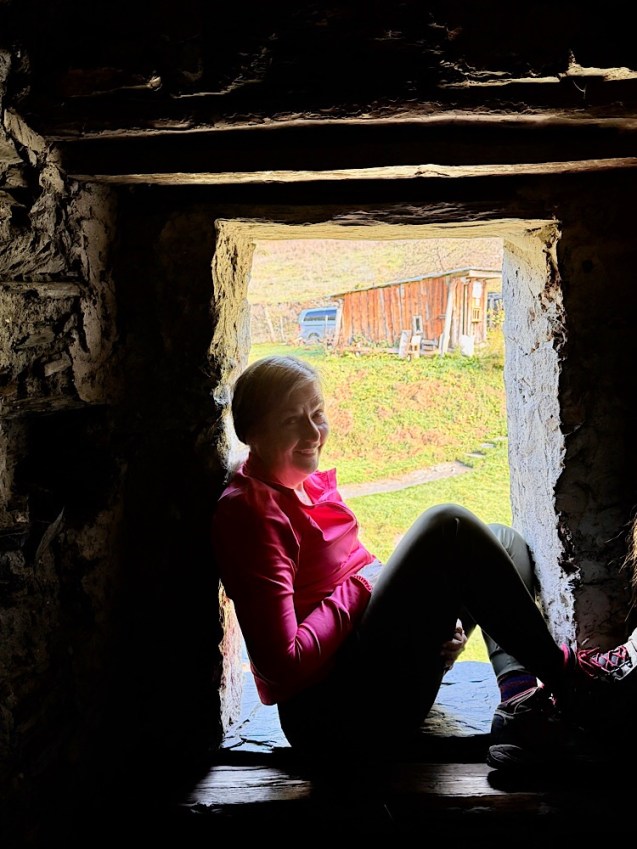
At the top of the town we found a cow path we followed to one of the many dead end streets. There a woman opened a gate and invited us in. Sign language and gestures work great when you don’t know the local language. With no idea what she wanted us to see we went in. There was another tower. She pointed and left. At first we found no entrance. Around the back, through long grass and up a slippery slope was the way in. Fun! We only dared go 2 floors up. Ladders are suspect and navigating the top is a challenge.
Upon seeing me ask Davindar for water, an older man sitting on the side of the road got up and offered me a drink from his hose. I so would have loved to take him up on his generosity. Unfortunately I didn’t dare trust the water.
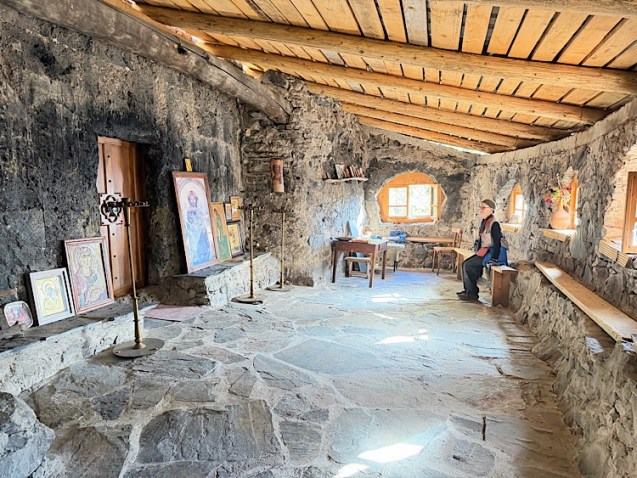
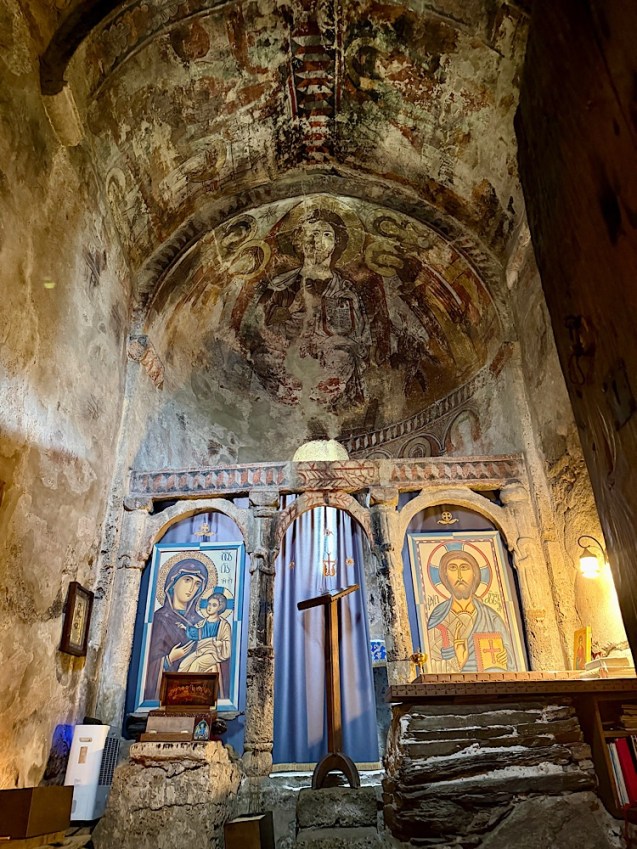
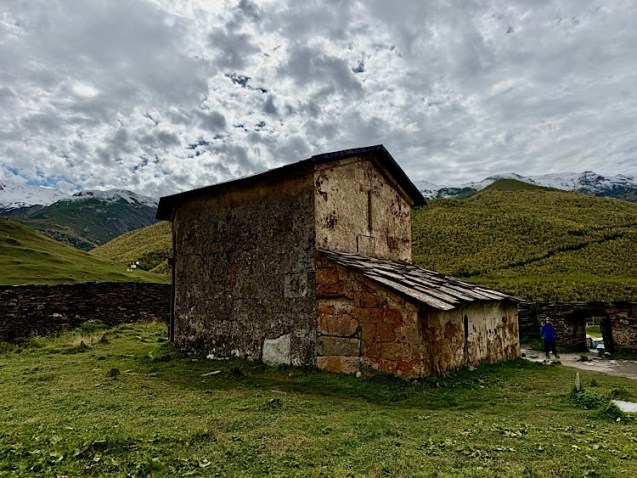
We found a 9th century church (Cathedral?) in a nearby village that blended in with the towers. After more than 20,000 steps and lots of climbing, we joined the others for a tasty bowl of soup, walked home and fell into bed.
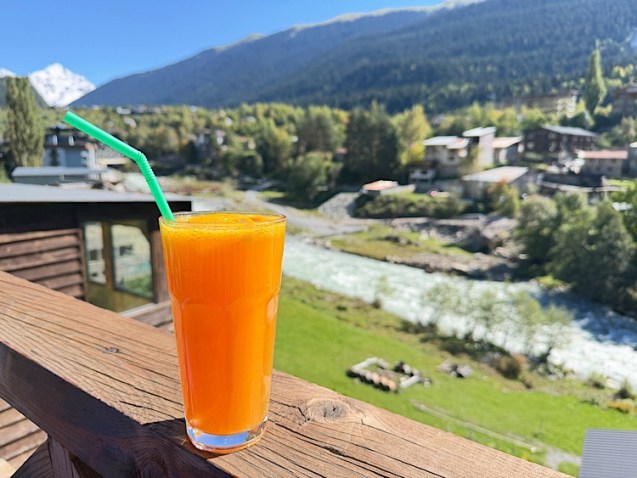
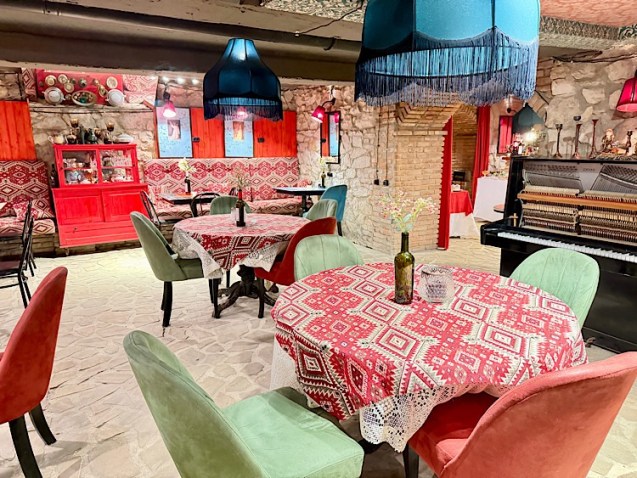
Considering Mestia is still relatively new to tourism, this hotel was wonderful. We decided the Sun Terrace must have been designed by women. It’s practical, well designed, inviting and very comfortable. The shower was the best we’d had so far. Our hostess even did our laundry for free! The town and attractions are a mere 15 minute walk.
Back to Kutaisi
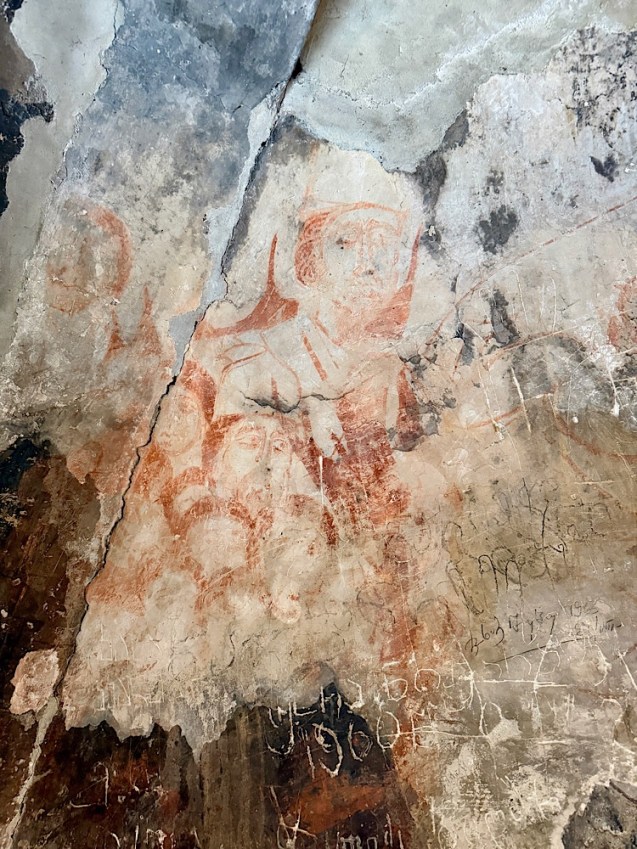
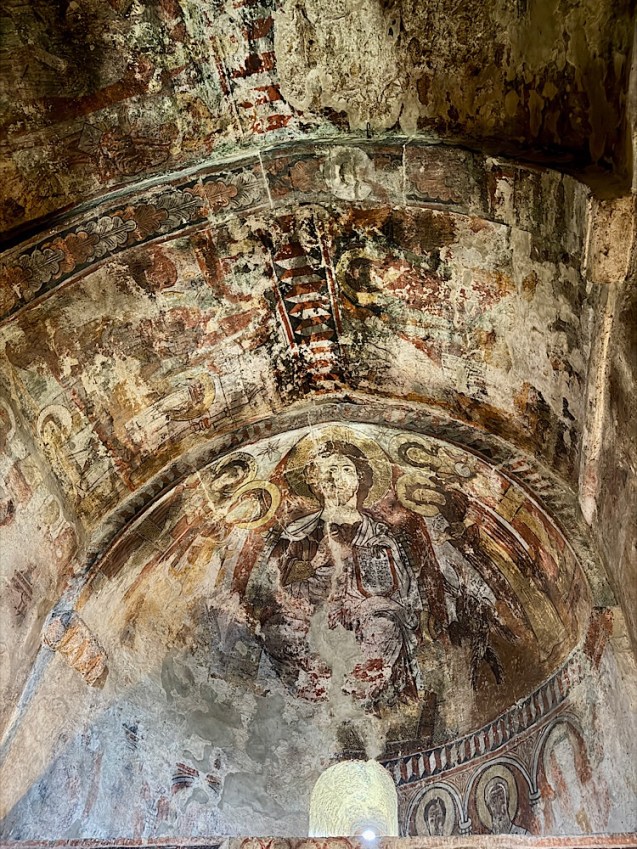
Tuesday: Another windy road through beautiful mountain scenery, with stops in villages with 4th century towers, a 9th century church and amazing photo stops took us several hours. The usual delays besides the stops included cows, goats, the odd landslide and hairpin turns. Lunch was in a quiet village where we enjoyed more typical Georgian food.
Kutaisi felt familiar by now. We checked into the Memoire hotel, settled and then headed out for ice cream as we knew exactly where to find Luka Polati.
Akhaltsikhe
Today’s drive wasn’t as interesting so we worked on a crossword puzzle. With combined brains we can actually finish a NYT puzzle.
The first stop was Borjomi park. They bottle the infamous Borjomi mineral water there. We had a nice walk and shared a mulled wine but it’s mostly some kind of adventure park. Apparently there’s a nature reserve but we’d have had to hire a jeep.
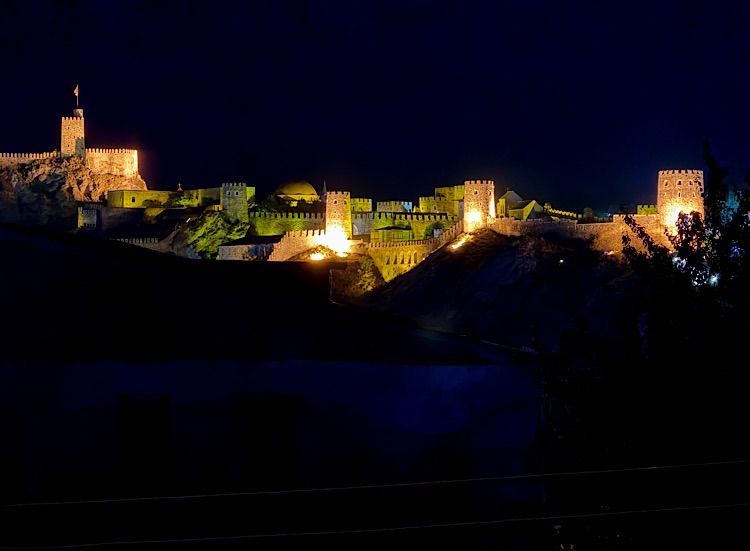
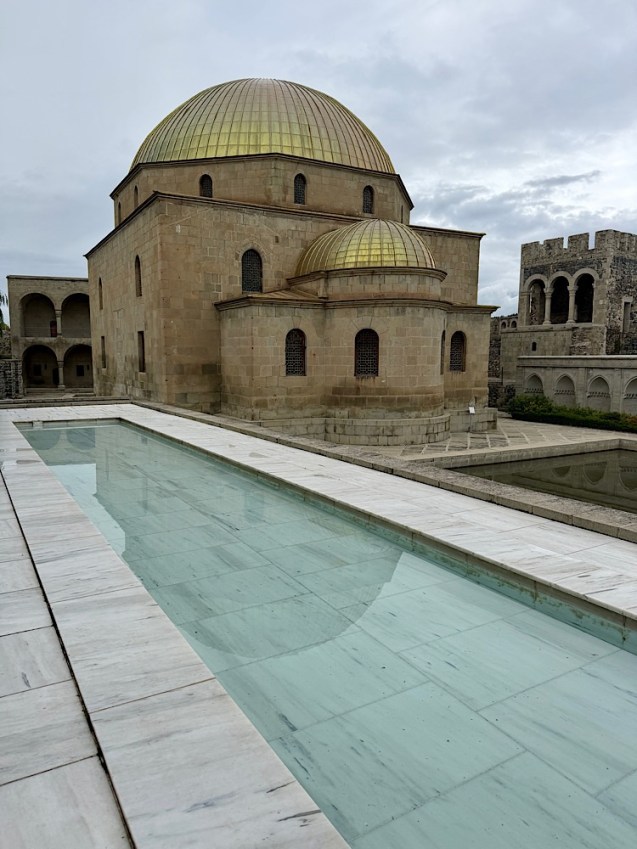
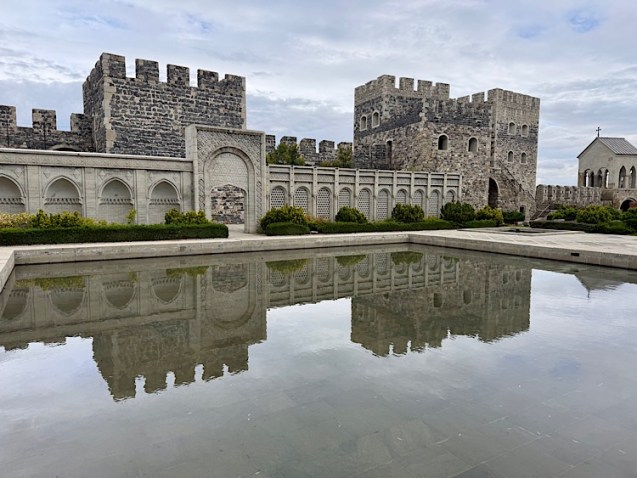
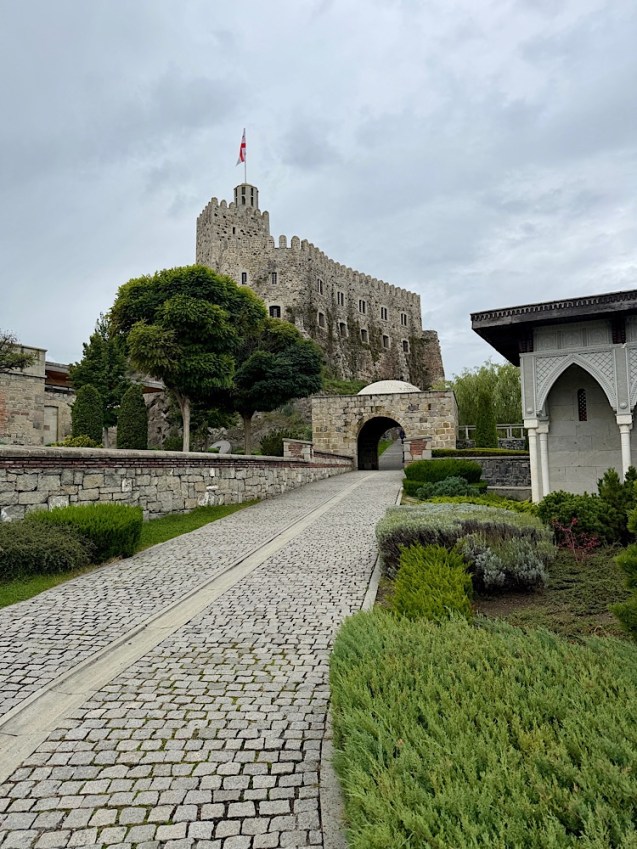
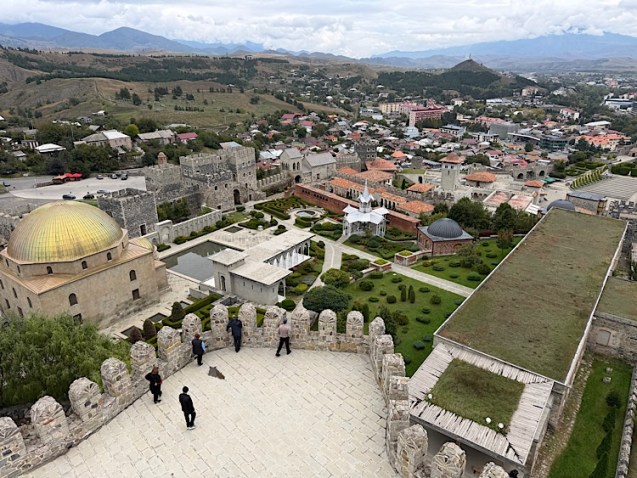
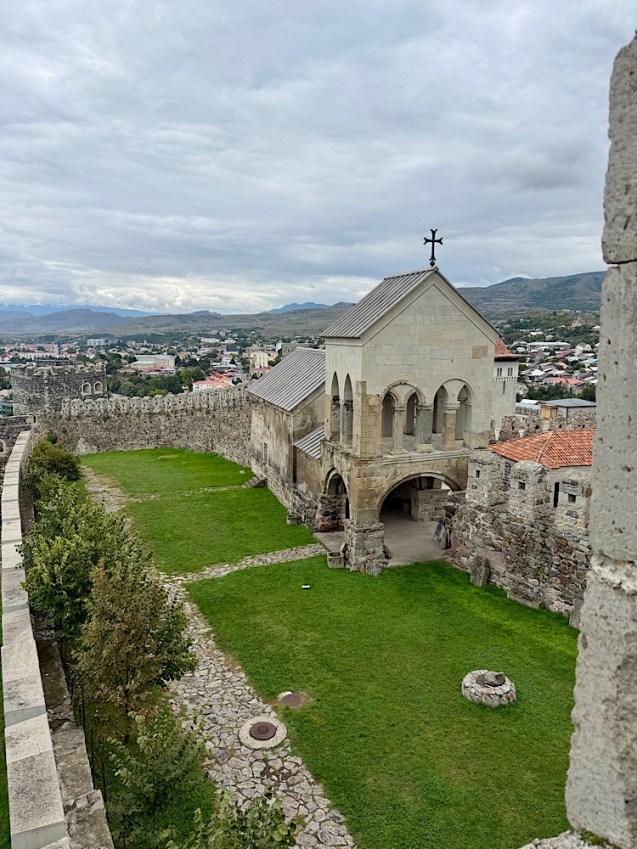
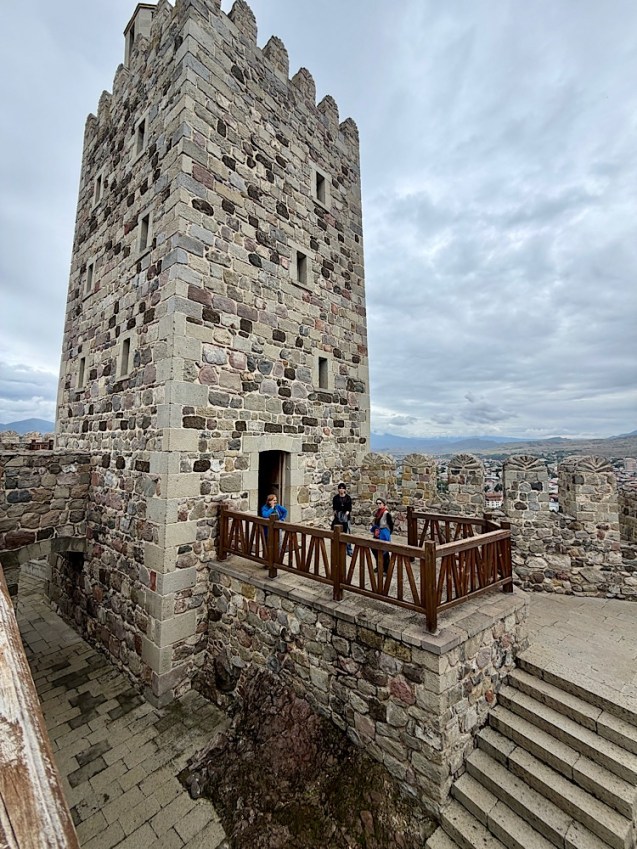
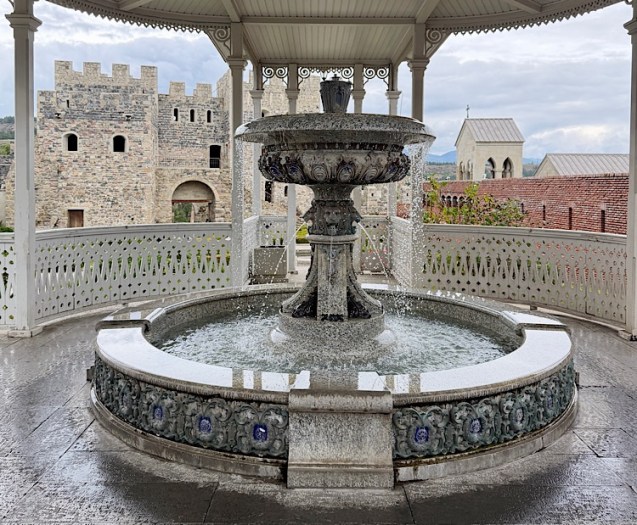
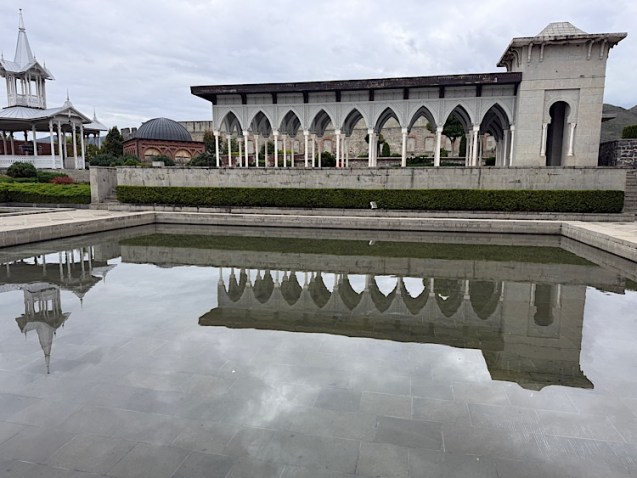
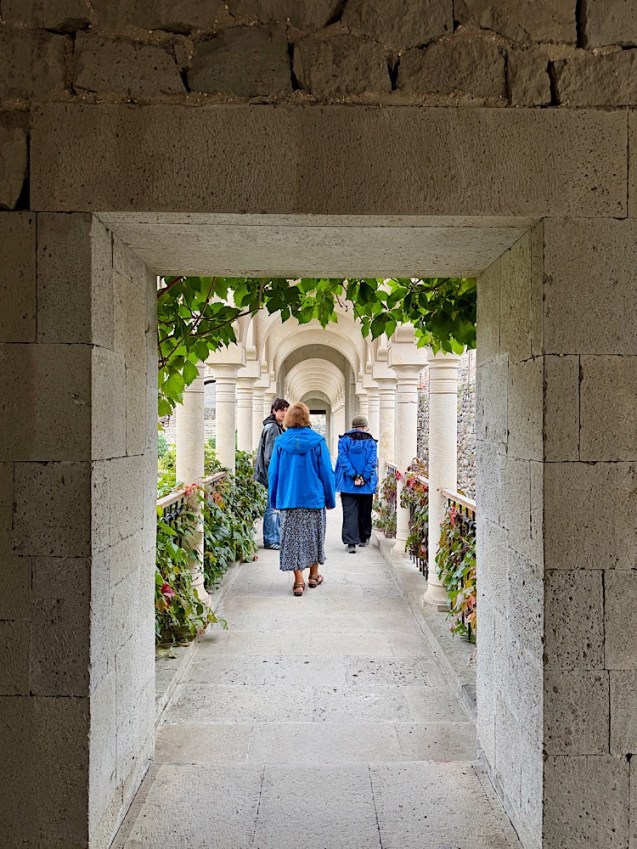
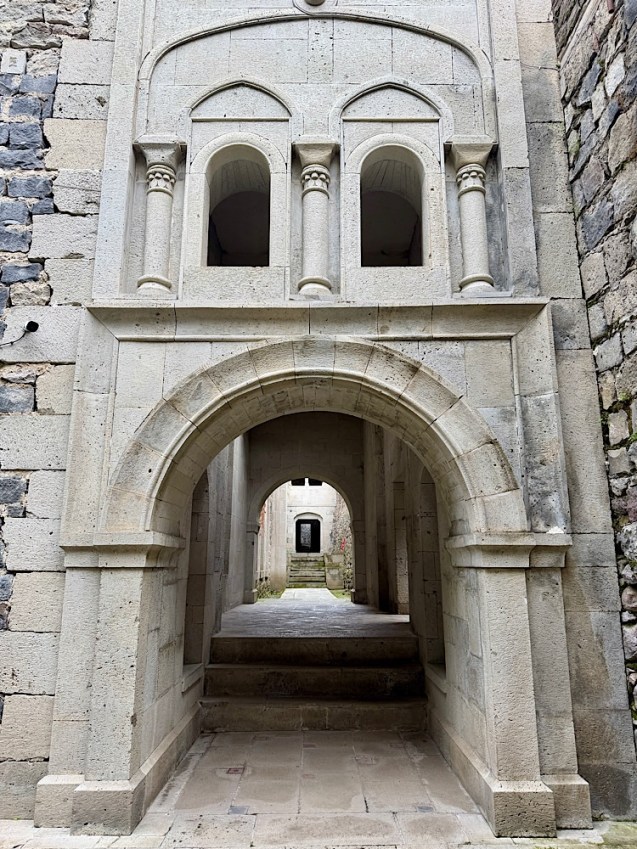
Upon arriving in Akhaltsikhe we spent some time in the recently renovated 13th century Rabat Fortress. It’s huge and now even hosts a hotel in what was once a Madrassa.
Tomorrow we head to Armenia. This border crossing could be interesting as apparently they’re very suspicious of people who have visited Azerbaijan. Fingers crossed!